
Range Gas Smell
Usually turns out to be
What to check first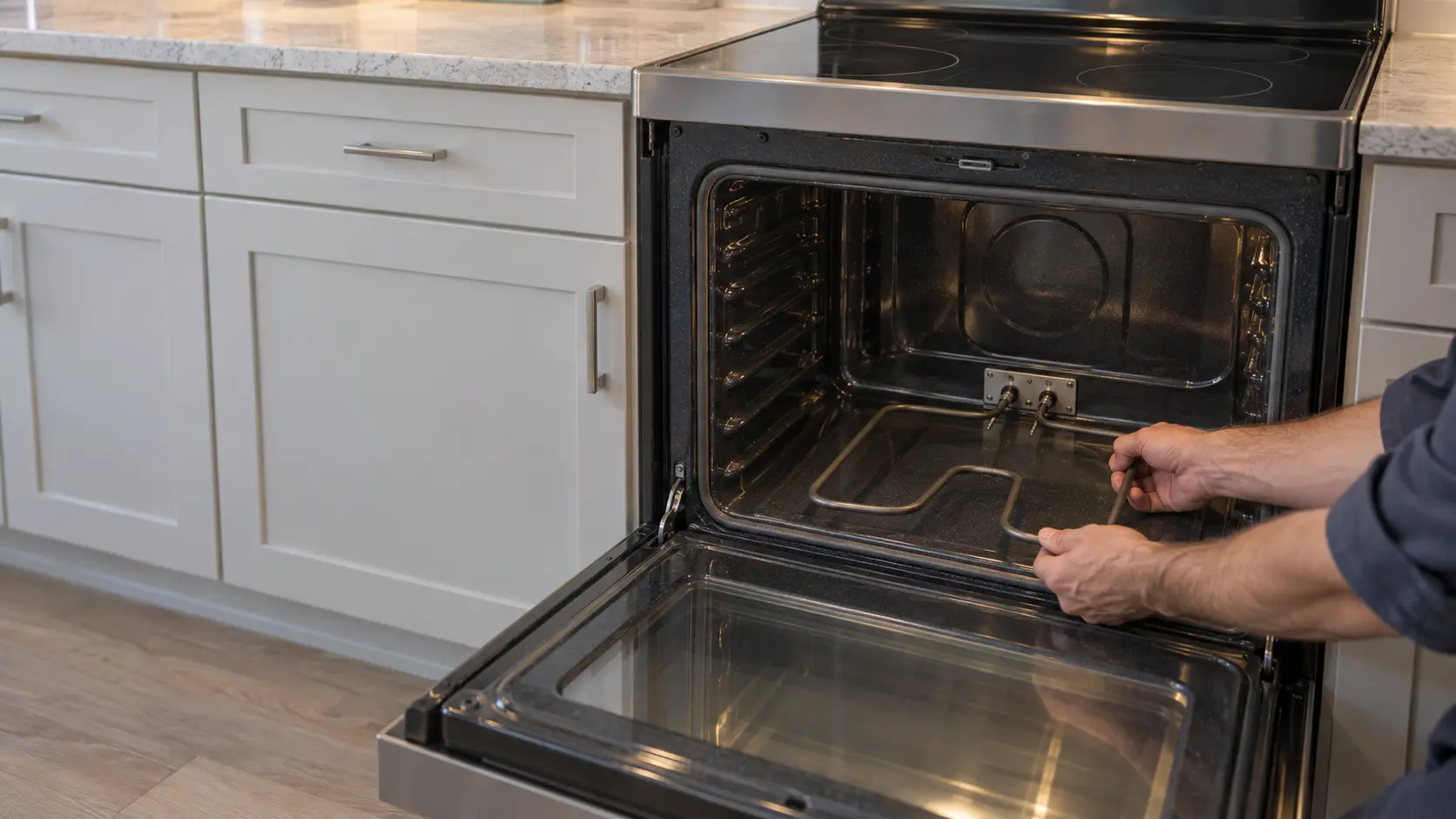
What we do
Ten repairs we take on. Each repair has its own page: what the work covers, where it sits on the cost scale, and the point at which an aging range is no longer worth spending on.
Mon–Sat, 8am–8pm
Book a visit
Three short steps, about a minute.
or call (844) 875-7576
Loading appointment form…
The appointment form couldn’t load. Please try again.
Familiar brands. Expert care.
Independent repair service. Not affiliated with, authorized or endorsed by any manufacturer. Brand names and model numbers are the property of their respective owners and are used here for identification only, to describe the appliances we service.
In the order it gets done: the cheapest cause first, and the expensive answer at the bottom where it usually belongs.
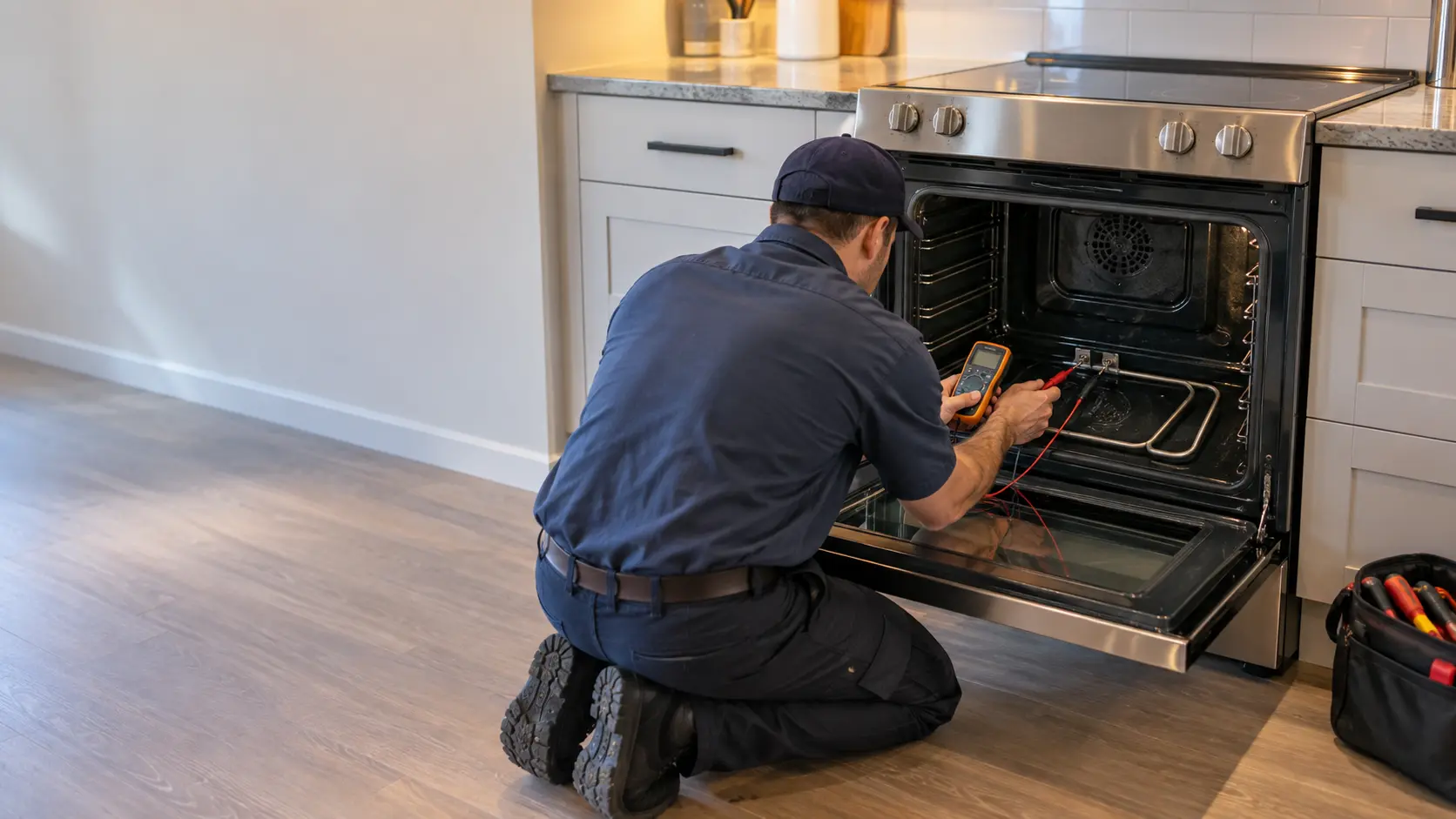
A visit that runs the burners, the elements and the oven in front of you and names the failed part before anything is ordered.
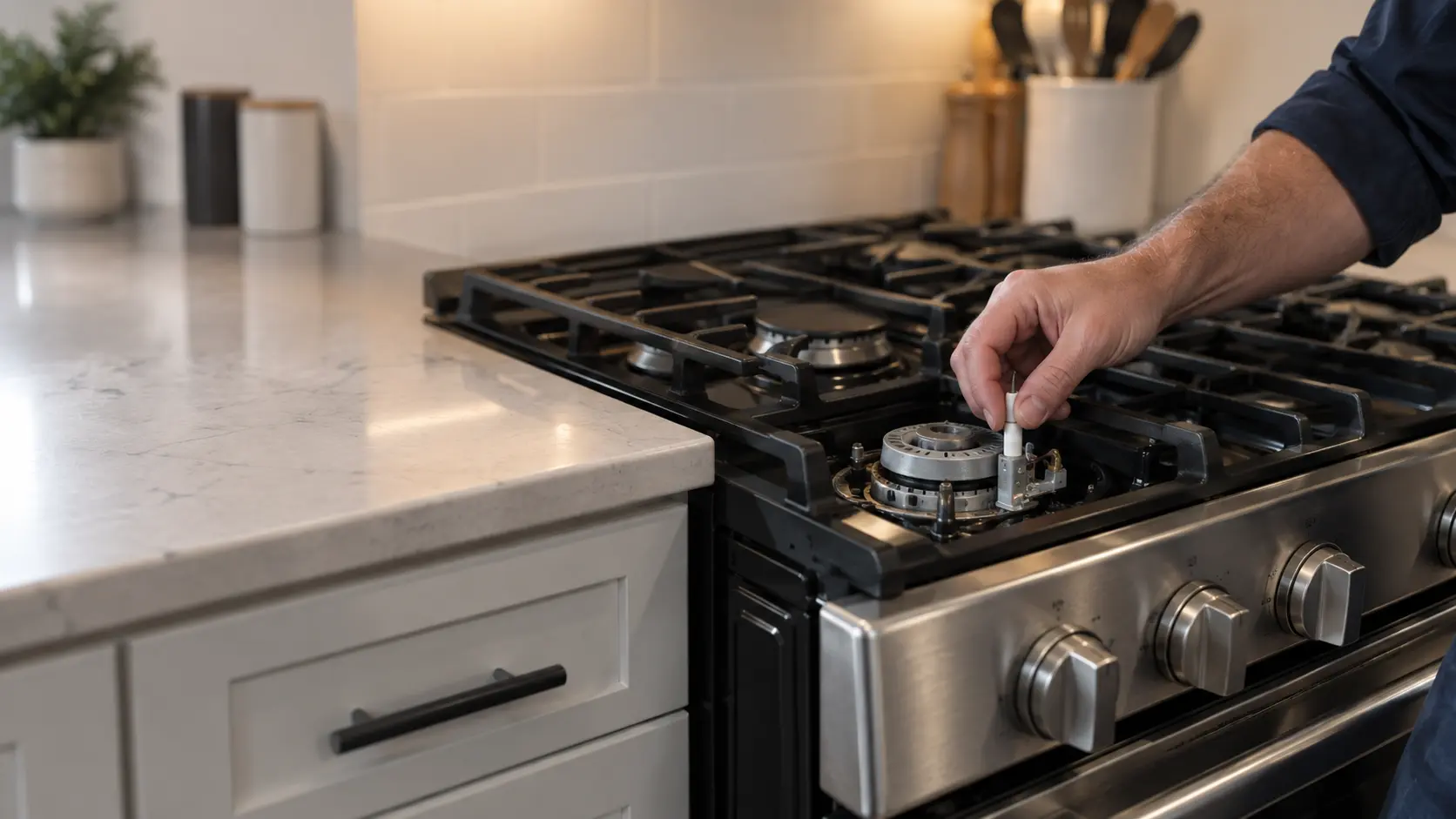
Gas burners that will not light, keep ticking or burn with a weak, yellow or uneven flame, traced to the igniter, the spark switch, the module or the burner itself.
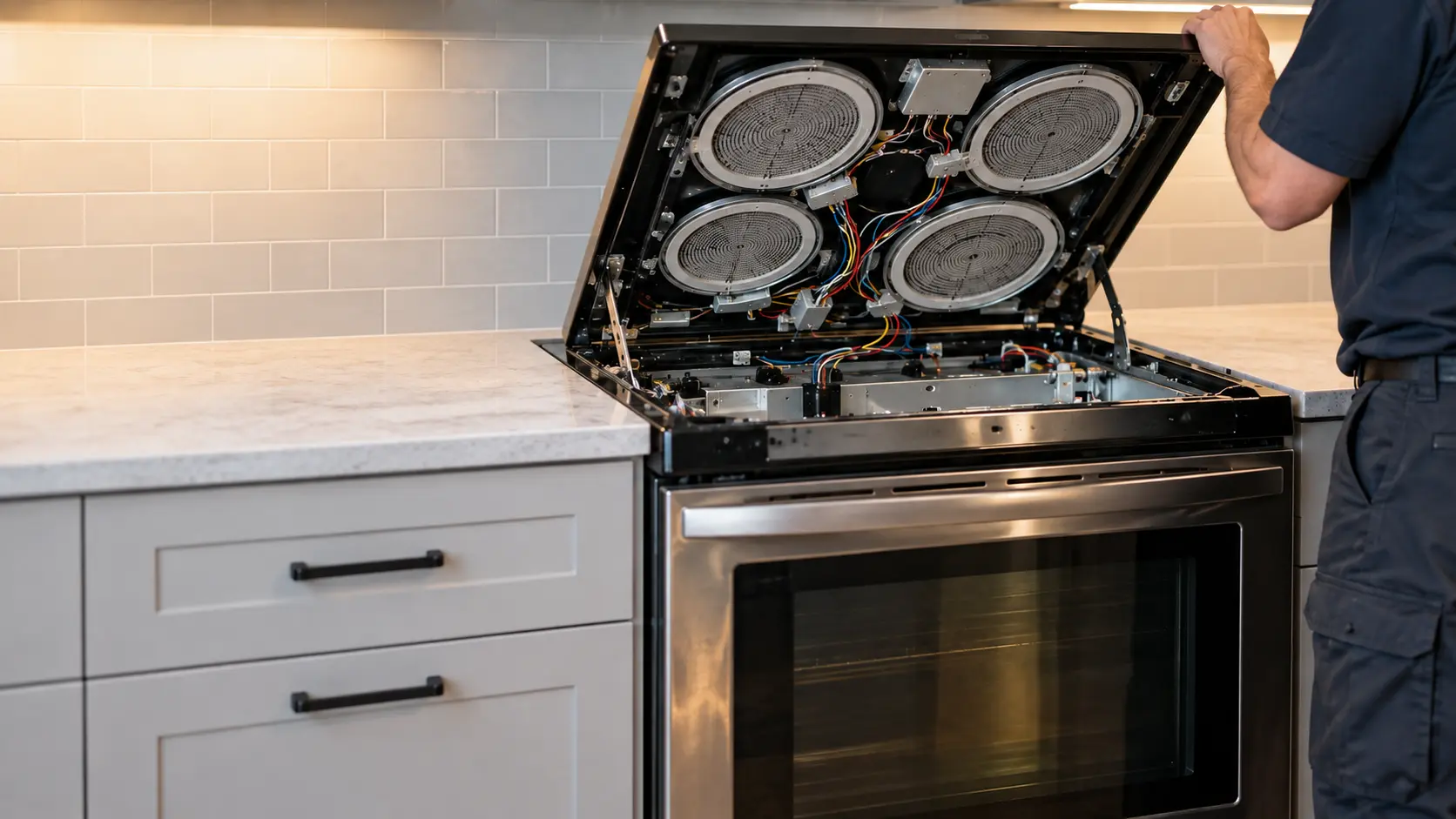
Electric zones that stay cold, run too hot or will not switch off, and cracked or damaged glass on radiant and induction models.

An electric range oven that stays cold, heats only from above or below, or will not broil, traced to the elements, their terminals or the relay that switches them.

A gas range oven that is slow to light, never lights or will not broil, traced to the glowing igniter, the oven safety valve or the burner.

A range oven that bakes hot, bakes slow, takes forever to preheat or posts a sensor code, traced to the sensor probe, the thermostat or the calibration.

Induction zones that ignore the pan, cut out, post error codes or stay dead, traced to the coil, its sensors, the power board or the cooling fan.

An oven door that will not close, sits crooked, leaks heat, or stays locked after self-clean, traced to the hinges, the gasket, the glass or the lock.

Knobs that spin or crack, touch keys that do nothing, blank displays, clocks that reset and control boards that switch the wrong thing.

A convection oven on a range that bakes unevenly, rattles, squeals or never starts its fan, traced to the motor, the blade or the convection element.
Before you bookBands rather than prices, because nobody can quote a figure before the range has been looked at — and the diagnostic visit that decides it, set against the repair.
10 repairsCheapest firstDiagnostic visit Read the cost guideA useful way to weigh a range repair is to price the new range you would actually buy, not the cheapest one on the floor. A freestanding range is easier to swap than a built-in appliance, but a slide-in or pro-style model has to match the counter gap, the gas or electrical hookup and often the backsplash, and a new one can bring a gas fitter or an electrician along with it. That is why most igniter, element, sensor and hinge repairs are worth doing, and why replacement usually wins only when a board is no longer made, the glass top and a board fail together on an older range, or rust has reached the oven body.
| Repair | Relative cost | Notes |
|---|---|---|
| Gas burner igniter, spark switch or burner head | low | Cleaning ports and reseating a cap costs almost nothing in parts. A new igniter, spark switch or burner head is a small part, and the spark module that feeds them all sits a little higher. |
| Surface element, switch or glass top | low to moderate | A coil, a receptacle or an infinite switch stays near the bottom. A radiant element under the glass is modest, while a whole new glass top is the part that carries this job toward the middle. |
| Bake or broil element | low | The most frequent part on an electric range oven. A hidden bake element under the floor panel adds some time, and scorched terminals behind the rear wall are replaced in the same visit. |
| Gas oven igniter, safety valve or burner | low to moderate | A weak igniter is the usual answer and sits at the low end. A safety valve or a broil burner costs more, and every opened gas joint is leak-tested before the job is closed. |
| Oven temperature sensor, thermostat or calibration | low | An offset adjustment needs no part. A replacement sensor is inexpensive; a capillary thermostat on a pro-style range takes longer to route and sits slightly higher. |
| Induction power board, coil or cooling fan | moderate to highest | A cooling fan or a pan sensor stays in the middle. A power board, or a board and a coil together on a premium induction range, is one of the costliest repairs a range takes. |
| Door hinges, gasket, glass or lock | low | A gasket or a pair of hinges is a short job. Door glass means taking the door apart, and a self-clean lock motor with its switches sits at the upper edge of this band. |
| Knobs, keypad or control board | moderate | A knob or a spark switch is minor. A keypad or ribbon cable lands in the middle, and a main control board, especially one that also runs the zones on top, is the priciest part in this row. |
| Convection fan, blade or ring element | low to moderate | A loose blade or a ring element stays near the low end. A motor reached only by sliding a heavy range out of its opening moves the job toward the middle of the scale. |
Most people arrive knowing the symptom, not the repair. These are the jobs each one usually turns out to be, cheapest first — and every one of them starts with the diagnostic visit.
Usually turns out to be
What to check firstUsually turns out to be
What to check firstUsually turns out to be
What to check firstUsually turns out to be
What to check firstUsually turns out to be
Usually turns out to be
What to check firstUsually turns out to be
What to check firstUsually turns out to be
What to check first
Back to your everyday
Three short steps online, or one call. Tell us what you are seeing and pick a window that works.