


Gas
Range Repair
Open flames on top and a gas-fired oven below, all fed by one supply line behind the range and lit by igniters rather than a match.
Mon–Sat, 8am–8pm
- 4 things that fail on it
- 28 makes build it
- 6 problems it shows
Book a visit
Three short steps, about a minute.
or call (844) 875-7576
Loading appointment form…
The appointment form couldn’t load. Please try again.
Is yours
a gas?
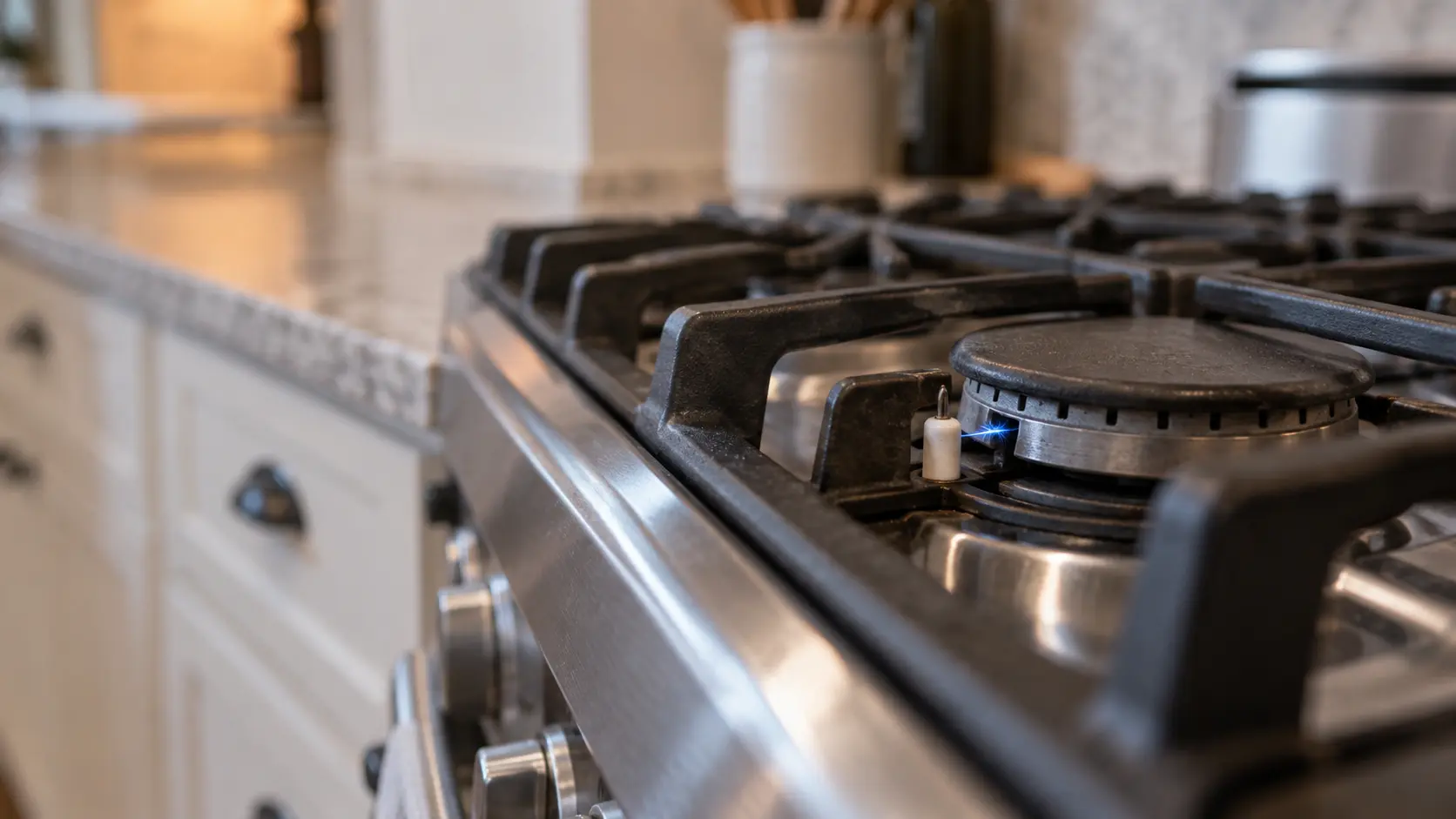
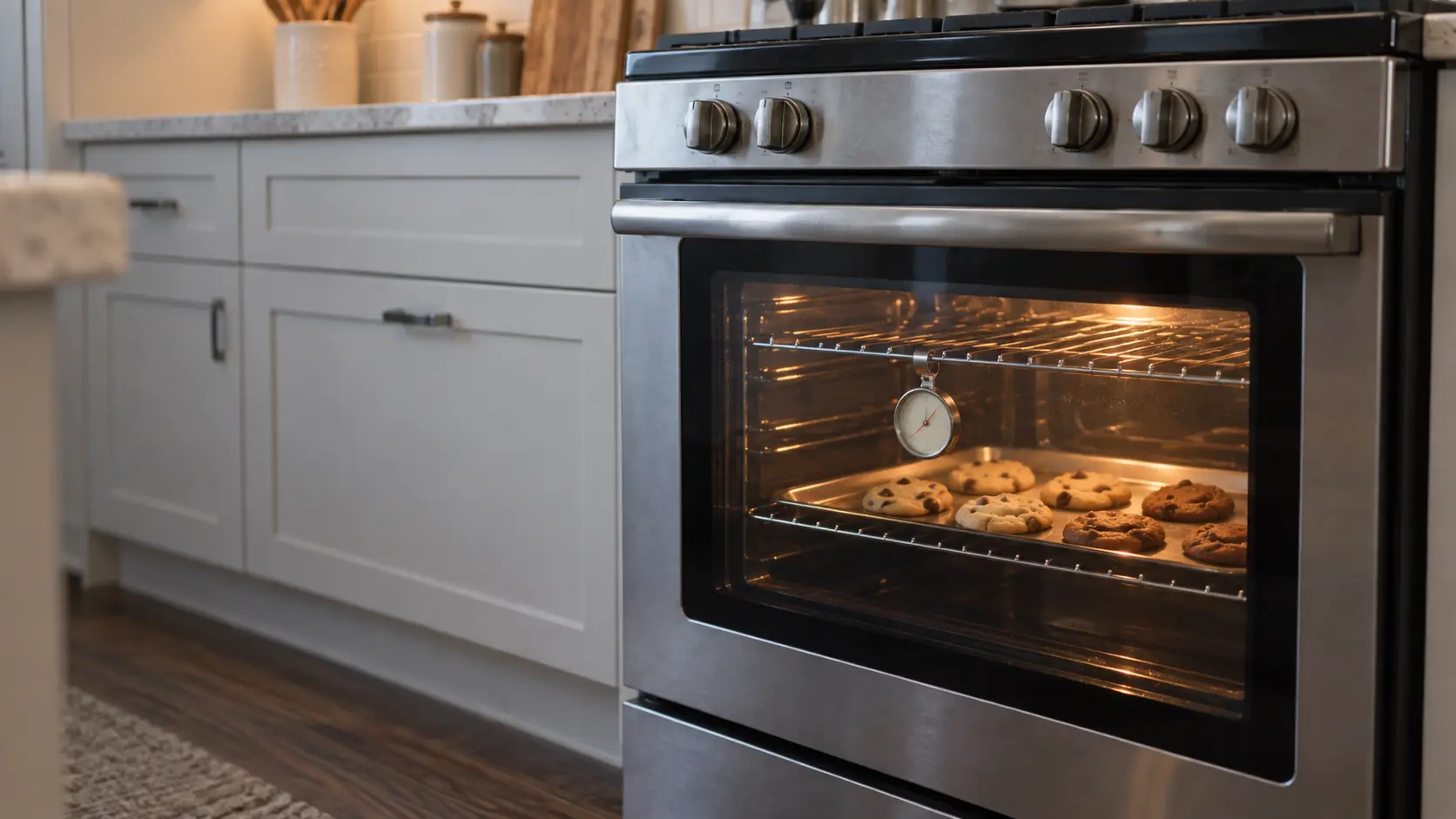
A gas range burns natural gas or propane in both halves of the appliance. On top, four to six sealed or open burners each get their gas from a valve behind a knob, and a small electrode sparks next to the burner cap until the flame catches. Below, the oven runs a bake burner under its floor and, on many models, a broil burner along the ceiling, lit by a hot surface igniter that must glow before the safety valve will open. The range still plugs into a regular wall outlet, because the sparking, the igniter, the clock and the oven light all run on household current. Gas range repair is therefore split between the gas path, the ignition parts that light it and the small amount of electronics that decides when the oven should fire.
 What fails on a gas range
How to tell
Turning a knob on the range top produces a rapid ticking and a blue flame that you can see under the grate.
Heavy cast-iron grates sit over the burners, and the burner caps lift off for cleaning.
A flexible gas connector and a shutoff valve are visible if the range is slid forward from the wall.
The power cord is an ordinary three-prong household plug rather than the large four-prong plug an electric range needs.
What fails
on this design.
On a gas range: the spark igniters on the burners, the oven's glowing igniter, burner heads, caps and ports, the oven safety valve and regulator.
The problems it showsThe spark igniters on the burners
Boil-overs soak the ceramic electrode and its wire, and the burner then ticks without lighting or keeps ticking after the flame is already burning.
The oven's glowing igniter
This part weakens slowly. It still glows, but no longer draws enough current to open the gas valve, so the oven takes longer and longer to light and finally stays cold.
Burner heads, caps and ports
Spilled food and cleaner block the small ports around a burner head, which leaves a ragged, yellow or lopsided flame instead of an even blue ring.
The oven safety valve and regulator
Less common, and always handled with care: a valve that no longer opens leaves the oven unlit, and any work on it ends with a check of every joint for leaks.
Getting at it,
and whether to.
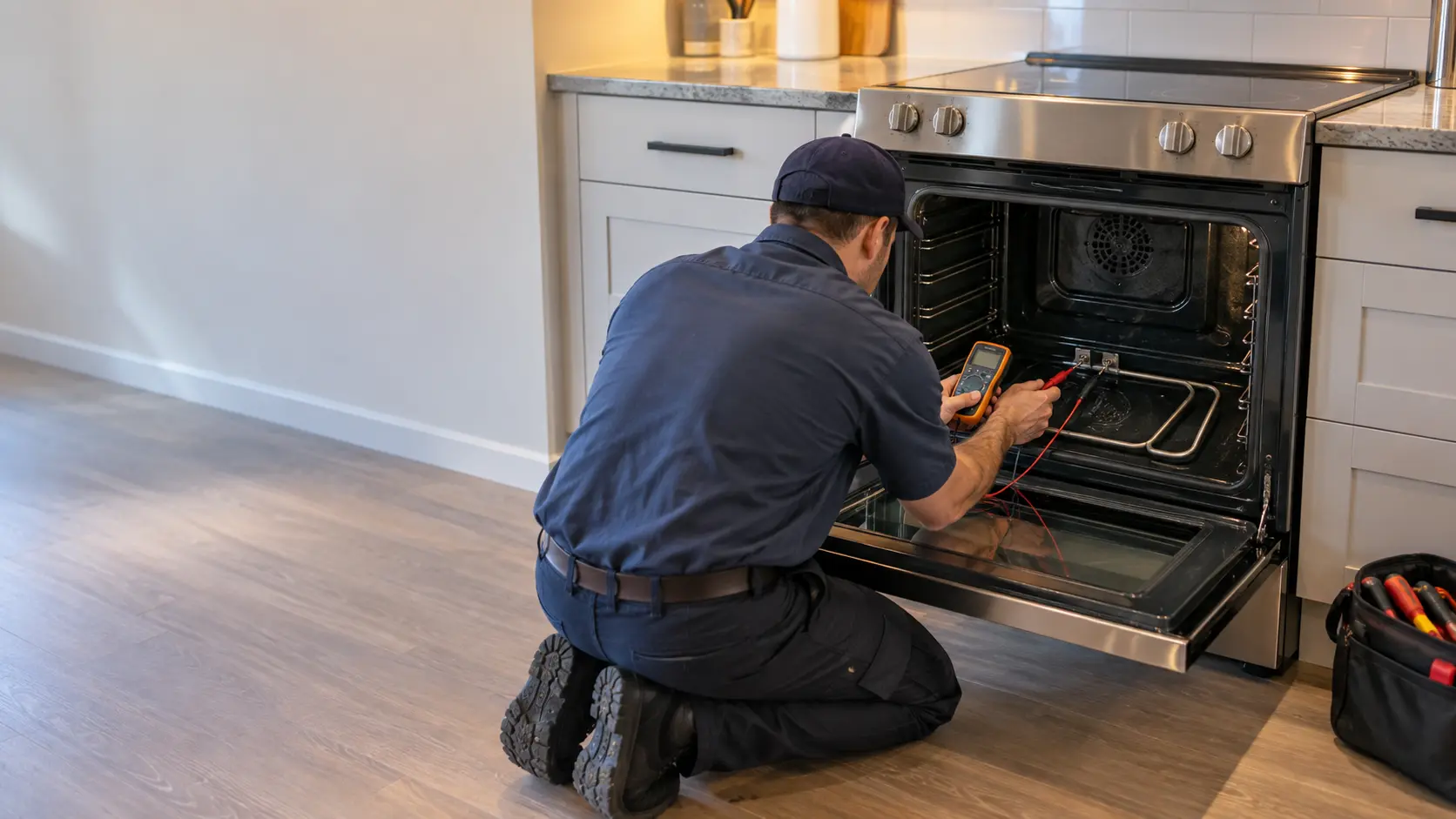
Most burner and igniter work happens from the top: grates and caps come off, and on many models the whole range top lifts on a hinge or a pair of screws.
What repairs costOn the visit
- The oven igniter and bake burner are reached by lifting out the oven floor panel, so the range usually stays where it stands.
- The gas valve, the regulator and the wiring at the back mean sliding the range forward, which is done with the gas shut off at the valve and a hand on the flexible connector so it does not kink.
- Before any gas fitting is touched the supply is closed, and afterward each joint that was opened is tested for leaks with the flame lit.
Repair or replace
A gas range is one of the easier appliances to keep going. Igniters, burner heads, caps, spark switches and even the oven safety valve are common parts, and none of them is expensive next to a new range. Replacement starts to make sense when the oven body has rusted through, the control board of a newer model is no longer made, or the range needs several major parts at once.
Book a visit for a gas rangeThe problems
it shows.
On a gas range, most often range burner won't light.
All problems


Who builds
a gas.
28 of the makes on this site build a gas range. Each mark opens that make's own page.
All 32 brandsGas range repair,
where we come out.
9 metros, each with its own page.
All service areasTampa BayFL · 31 areas
Miami / South FloridaFL · 47 areas
New York MetroNY · 75 areas
HoustonTX · 36 areas
ChicagoIL · 50 areas
Los AngelesCA · 95 areas
San DiegoCA · 31 areas

Questions about
gas ranges.
One burner clicks but will not light. The others work. Why?
My gas range oven takes a long time to light, then works. Is that a problem?
The flame on one burner is yellow and tall. Should I keep cooking on it?
What should I do if I smell gas near the range?
Can a gas range be converted from natural gas to propane?
Back to your everyday
Is it a gas range?
Say so when you book — it changes what the technician brings and how the visit is planned.