

Induction
Range Repair
A glass top that heats the pan itself through copper coils and power boards, over an electric oven, with electronics doing almost all the work.
Mon–Sat, 8am–8pm
- 4 things that fail on it
- 28 makes build it
- 6 problems it shows
Book a visit
Three short steps, about a minute.
or call (844) 875-7576
Loading appointment form…
The appointment form couldn’t load. Please try again.
Is yours
an induction?
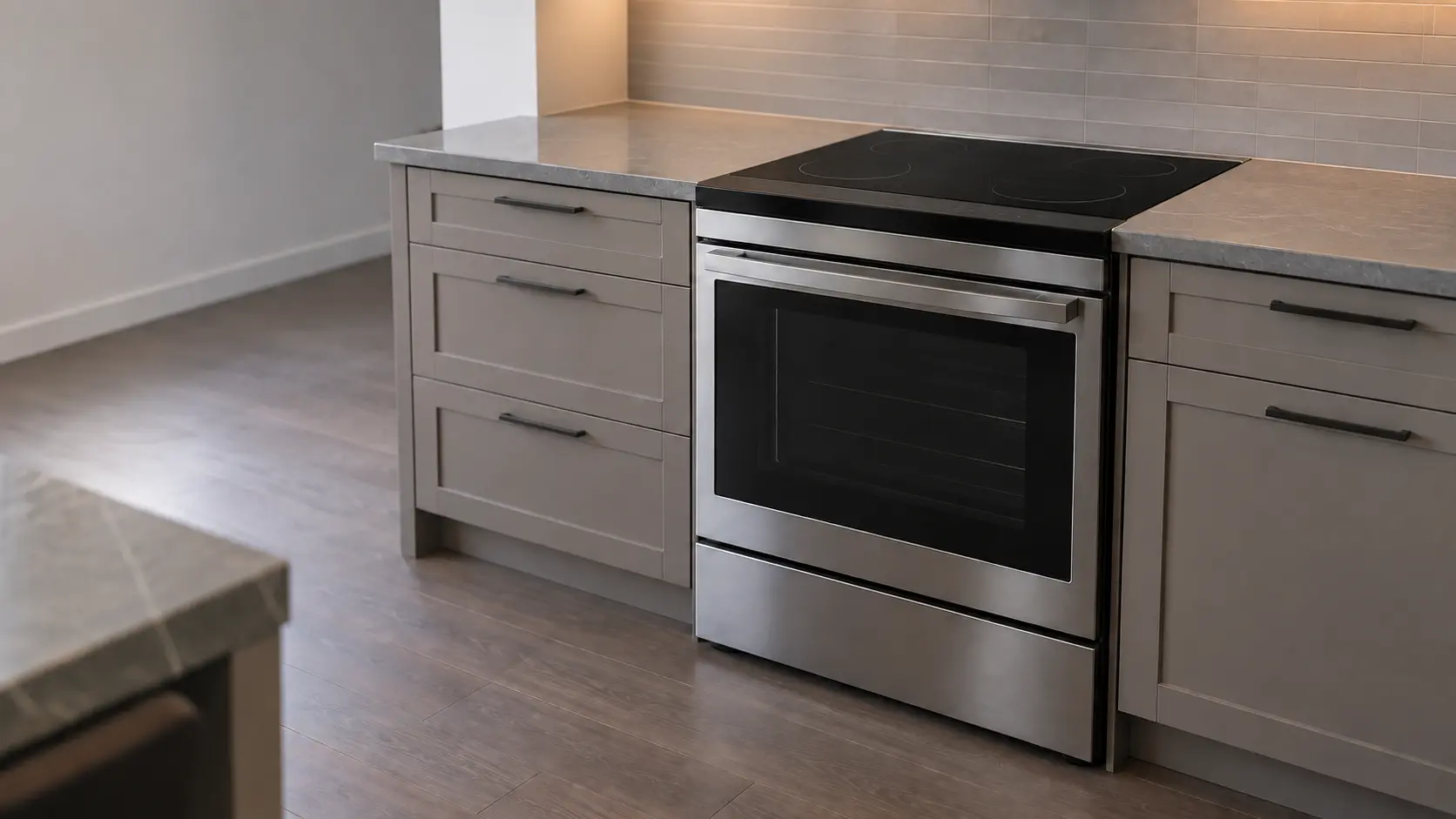
An induction range looks like a smooth glass-top electric range, but nothing under the glass glows. Each zone has a flat copper coil, and a power board drives a rapidly alternating current through it. That builds a magnetic field that heats only a pan made of iron or magnetic steel, which is why the glass stays cooler and why an aluminum or glass pan does nothing. Fans draw air across the boards to keep them cool, sensors under the glass watch for overheating, and a touch panel sets the power. The oven below is an ordinary electric oven with bake, broil and often convection elements. Induction range repair is mostly electronics: the coils, the power and filter boards, the cooling fans, the touch controls, the glass and the oven parts underneath.
 What fails on an induction range
How to tell
A zone set to high stays black, and the glass next to the pan is only warm to the touch.
The zone refuses to start, or shows a pan symbol, when there is no pan on it or when the pan is not magnetic.
A soft hum or buzz comes from the pan at higher settings, and a cooling fan runs under the top while cooking.
Controls are touch keys or a slider printed on the glass rather than knobs, on most models.
Not yours?Gas rangeElectric rangeDual-fuel range
What fails
on this design.
On an induction range: the power board for a pair of zones, the cooling fan, pan detection and coil sensors, the glass and the touch panel.
The problems it showsThe power board for a pair of zones
Components on the board that drives the coils can fail from heat or a power surge, and one or two zones stop working together or post an error.
The cooling fan
When the fan under the top slows or clogs with grease, the boards overheat and the range cuts power to a zone in the middle of cooking.
Pan detection and coil sensors
A coil or its sensor that fails leaves a zone that no longer recognizes a pan that worked last week.
The glass and the touch panel
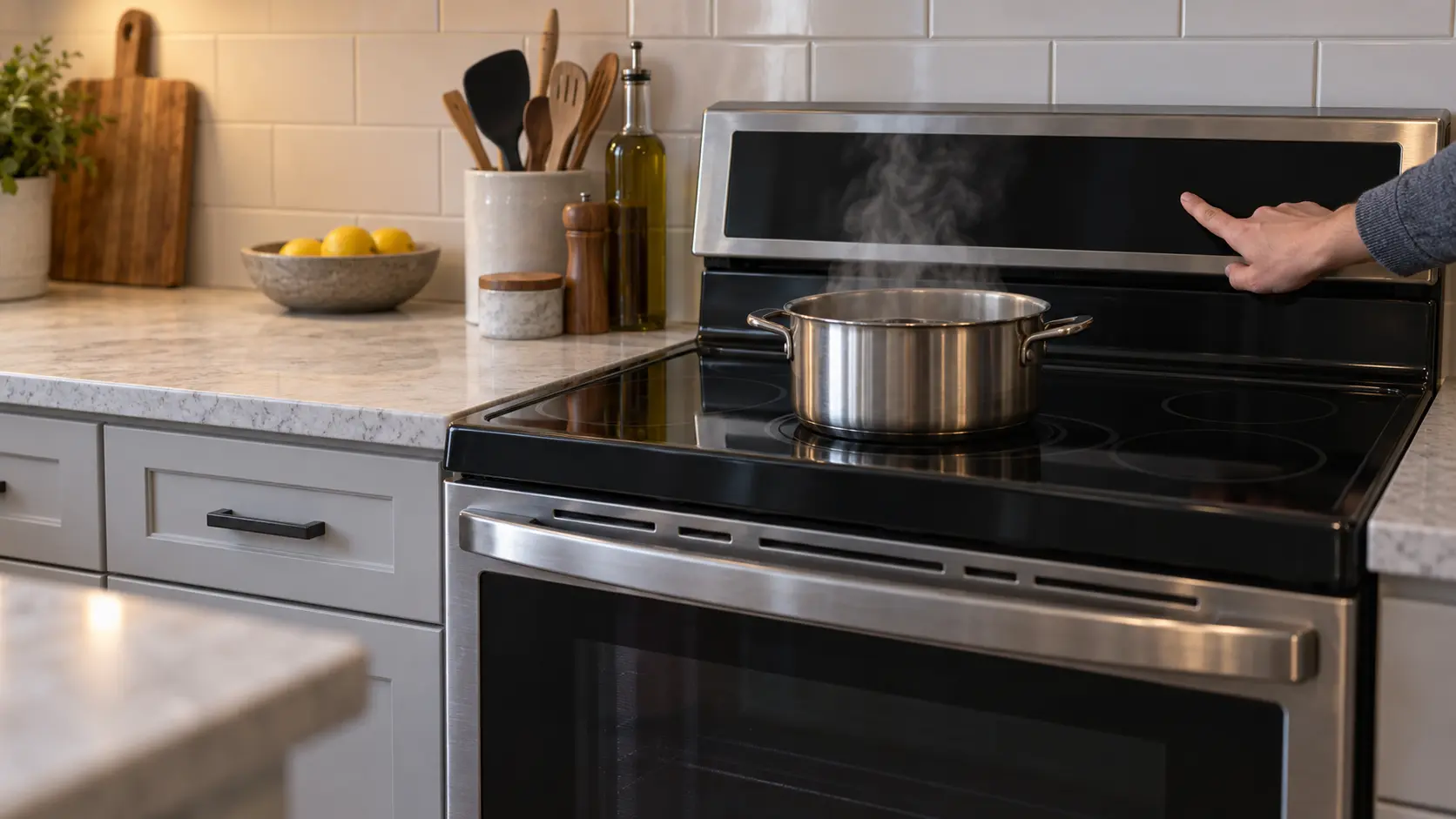
Cracked glass is a stop-using problem as on any glass top, and spills that reach the touch keys make them unresponsive or trigger them on their own.
Getting at it,
and whether to.
Coils, sensors and the power boards live under the glass, which lifts off or hinges up once the retaining screws are out.
What repairs costOn the visit
- Board work is done with the range switched off at the breaker and time allowed for the capacitors on the boards to discharge.
- Error codes shown by the touch panel are read and recorded before anything is changed, since they often name the zone or the board in question.
- The oven below is serviced like any electric oven, from inside the cavity or from the back with the range pulled forward.
Repair or replace
Induction ranges cost more than radiant ones, and most of their failures are boards, fans and sensors that can be replaced without disturbing the rest. Repair is usually the sensible choice while parts are available. The deciding cases are a model whose boards are no longer made, or a cracked glass top combined with a failed board on an older range.
Book a visit for an induction rangeThe problems
it shows.
On an induction range, most often induction range not detecting pan.
All problems
Induction Range Not Detecting Pan
6 causes, cheapest first

Range Surface Element Not Heating
6 causes, cheapest first

Range Error Code
6 causes, cheapest first
Range Control Panel Not Responding
5 causes, cheapest first

Range Glass Top Cracked
5 causes, cheapest first
Range Keeps Tripping the Breaker
6 causes, cheapest first
Who builds
an induction.
28 of the makes on this site build an induction range. Each mark opens that make's own page.
All 32 brandsInduction range repair,
where we come out.
9 metros, each with its own page.
All service areasTampa BayFL · 31 areas
Miami / South FloridaFL · 47 areas
New York MetroNY · 75 areas
HoustonTX · 36 areas
ChicagoIL · 50 areas
Los AngelesCA · 95 areas
San DiegoCA · 31 areas

Questions about
induction ranges.
My induction range says there is no pan, but the pan is on the zone. Why?
A zone on my induction range shuts off in the middle of cooking. What is wrong?
Is the buzzing from my induction range normal?
The touch keys on my range stopped responding. Is the board gone?
Back to your everyday
Is it an induction range?
Say so when you book — it changes what the technician brings and how the visit is planned.