


Electric
Range Repair
Coil elements or radiant elements under a smooth glass top, with an electric oven below, all running on a dedicated 240-volt circuit.
Mon–Sat, 8am–8pm
- 4 things that fail on it
- 15 makes build it
- 6 problems it shows
Book a visit
Three short steps, about a minute.
or call (844) 875-7576
Loading appointment form…
The appointment form couldn’t load. Please try again.
Is yours
an electric?
An electric range heats the pans on top with resistance elements and the oven below with a bake element and a broil element. Older and lower-priced models use open coils that plug into a receptacle and lift out for cleaning. Most ranges sold today hide radiant elements under a smooth ceramic glass surface, where each ring glows red through the glass when it is on. Every element is switched by a control on the front or the back, either an infinite switch behind a knob or a relay on an electronic board. The whole range draws a large current through a heavy four-wire or three-wire cord on its own breaker. Electric range repair covers the elements, the switches and relays that feed them, the glass surface itself, the oven parts and the wiring that carries that much current.
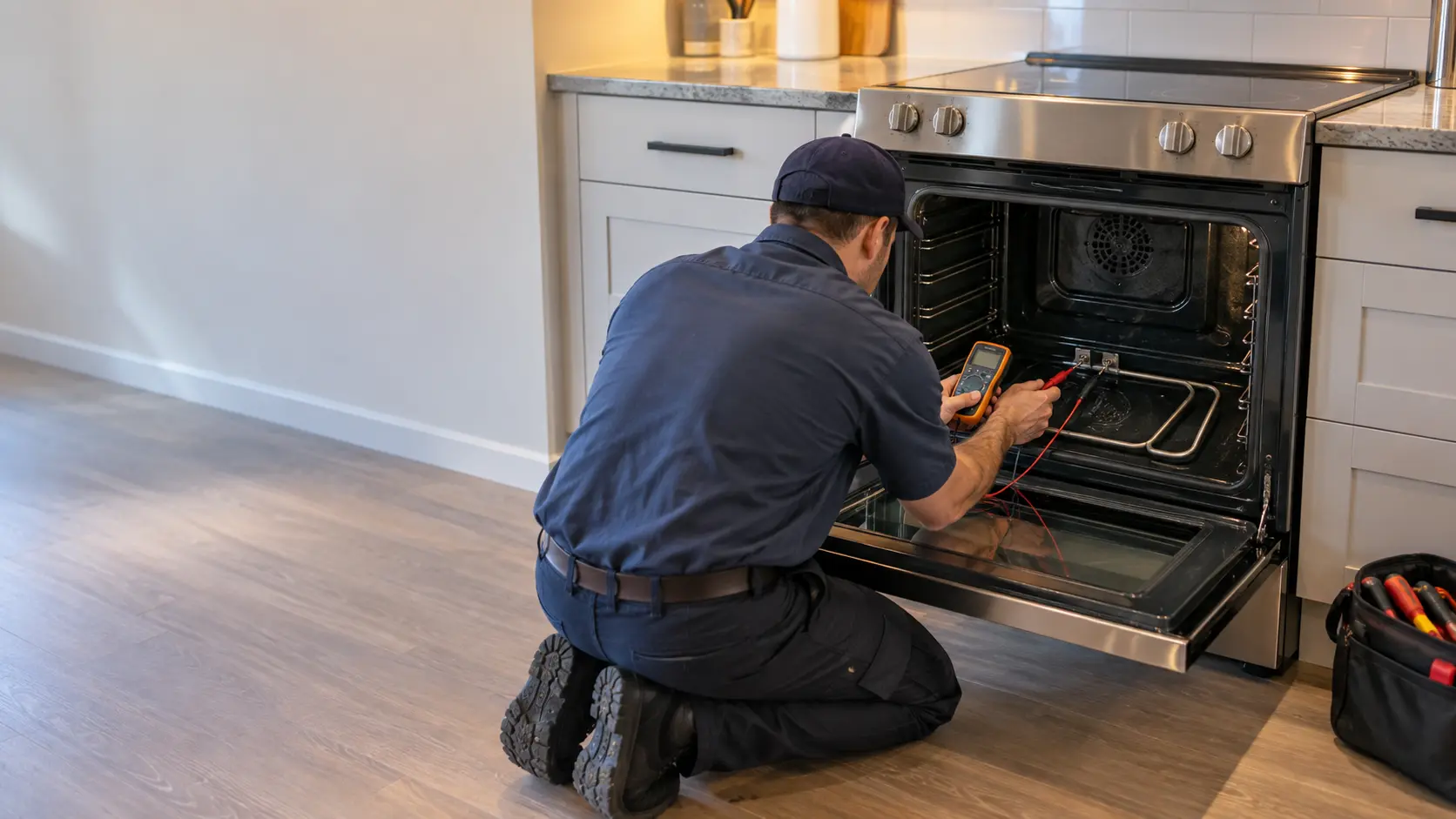 What fails on an electric range
How to tell
There is no visible flame: the burners are metal spirals or glowing rings seen through a flat glass surface.
The range plugs into a large round or rectangular receptacle behind it, with a thick cord and three or four prongs.
Warning lights marked for a hot surface stay lit after a zone is turned off, until the glass has cooled.
There is no gas line or shutoff valve behind the range when it is slid forward.
Not yours?Gas rangeDual-fuel rangeInduction range
What fails
on this design.
On an electric range: a surface element, the infinite switch or a board relay, the glass surface, receptacle blocks and terminals.
The problems it showsA surface element
Coils burn out at a thin spot and radiant elements break their ribbon wire, so one zone stays cold while the rest work normally.
The infinite switch or a board relay
The part that pulses power to a zone can stick on or stop switching, which leaves an element that runs at full heat on every setting or never heats at all.
The glass surface
A dropped jar, a pan dragged across the glass or sugar left to burn on can crack or pit the surface, and a cracked top must not be used until it is replaced.
Receptacle blocks and terminals
On coil models the socket a coil plugs into scorches over time, and on every electric range the terminal block where the cord connects can overheat if a screw works loose.
Getting at it,
and whether to.
Coils lift straight out of their receptacles, so a burned coil or socket is often a short job done from above.
What repairs costOn the visit
- On a glass-top model the whole top hinges up or lifts off after a few screws, giving access to every radiant element and the limiter on each one.
- Knob switches and the board sit behind the rear control panel on most freestanding models and behind the front panel on slide-in and front-control models.
- The range is unplugged or switched off at the breaker before any panel comes off, because a 240-volt circuit stays live whether or not a zone is on.
Repair or replace
Coils, sockets, radiant elements, switches and oven elements are all modest parts, and they make up most of the work on an electric range. The glass top is the part that decides many cases: it costs a noticeable share of a new range, and on an older or lower-priced model the owner sometimes chooses to replace the whole appliance instead. On a newer range, or one that matches the kitchen, a new glass top is usually worth fitting.
Book a visit for an electric rangeThe problems
it shows.
On an electric range, most often range surface element not heating.
All problems
Range Surface Element Not Heating
6 causes, cheapest first

Range Burner Won't Turn Off
6 causes, cheapest first

Range Glass Top Cracked
5 causes, cheapest first
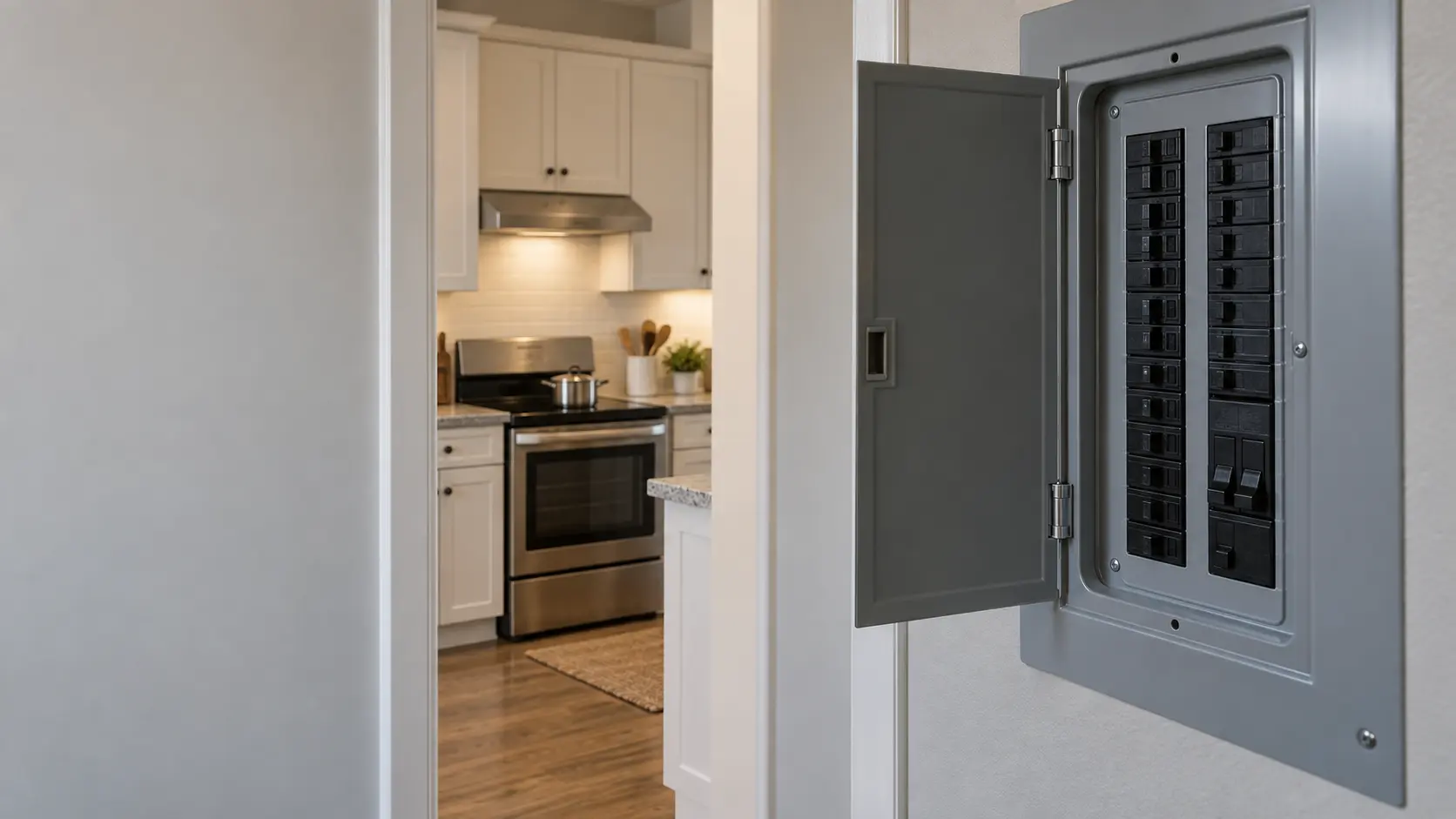
Range Keeps Tripping the Breaker
6 causes, cheapest first

Range Oven Not Heating
7 causes, cheapest first

Range Burning Smell
6 causes, cheapest first
Who builds
an electric.
15 of the makes on this site build an electric range. Each mark opens that make's own page.
All 32 brandsElectric range repair,
where we come out.
9 metros, each with its own page.
All service areasTampa BayFL · 31 areas
Miami / South FloridaFL · 47 areas
New York MetroNY · 75 areas
HoustonTX · 36 areas
ChicagoIL · 50 areas
Los AngelesCA · 95 areas
San DiegoCA · 31 areas

Questions about
electric ranges.
One element on my electric range stays cold. Do I need a new element?
An element glows red on every setting, even low. What causes that?
Can I keep using a glass top with a small crack?
Why does my electric range trip the breaker?
The hot surface light stays on after I turn everything off. Is that normal?
Back to your everyday
Is it an electric range?
Say so when you book — it changes what the technician brings and how the visit is planned.