


When to stop using the range
Gas, fire and burn safety
guides.
What to do when you smell gas, how to smother a pan fire, and how to shut a range down when a burner or element will not turn off.
Mon–Sat, 8am–8pm
- Three guides
- Read before you book
- Says where to stop
Book a visit
Three short steps, about a minute.
or call (844) 875-7576
Loading appointment form…
The appointment form couldn’t load. Please try again.
Gas, fire and burn safety,
guide by guide.
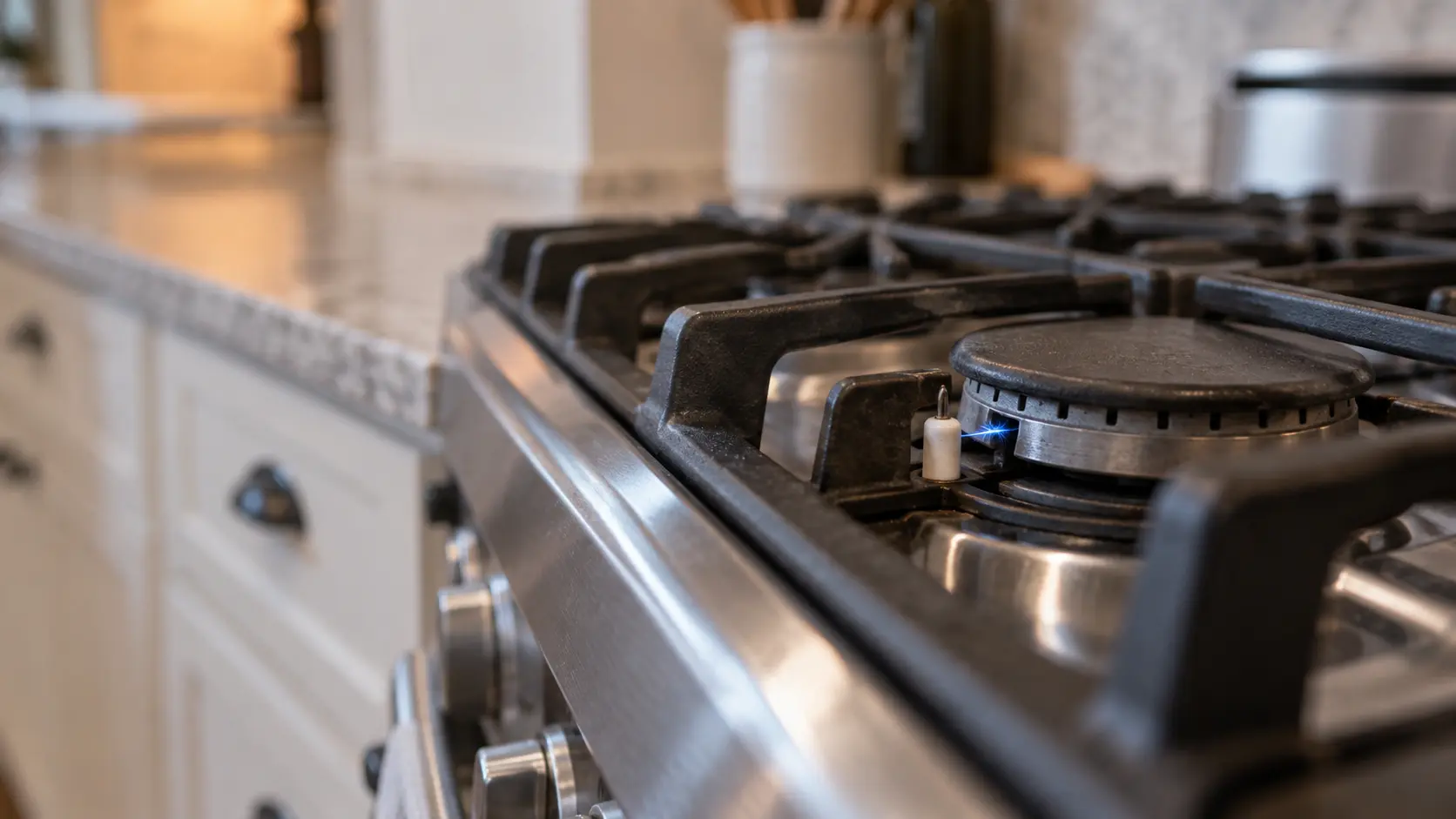
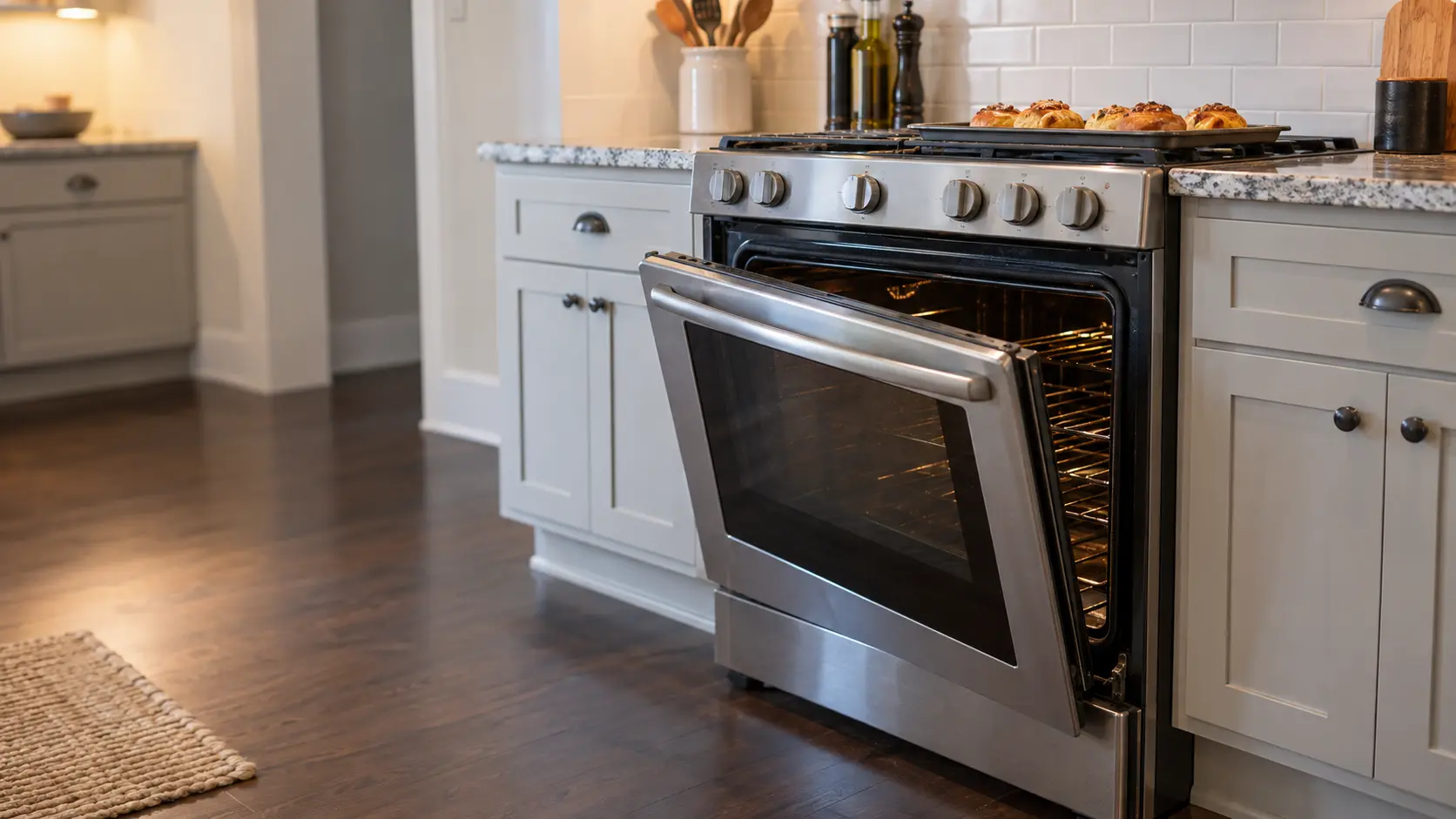
A range is the one appliance in the kitchen that combines an open flame or a glowing element, a heavy door that swings out at knee height and a supply line of gas or 240-volt power, all at the spot where people stand to cook. These guides cover the moments when that combination turns from cooking into safety: a smell of gas, a range that could tip, and what burning gas does to the air in the room.
All 18 guides
Smell Gas Near the Range? Leave First, Call From Outside


Cooking With Gas and the Air in Your Kitchen
When to stop using the range.
Each guide puts the action first and the explanation second. For gas the order never changes: everyone out, nothing switched, the utility called from outside. For tip-overs it is a flashlight and a gentle tilt before anyone gets hurt. For indoor air it is the hood switched on and a carbon monoxide alarm that works.
They are worth reading on a quiet day, especially after moving into a home with a gas range or after a new range has been delivered. None of them asks you to open a panel or loosen a fitting, and every one marks plainly where the owner's part stops and the utility's, the electrician's or a technician's begins.
Not sure where to start?The short answerSmell Gas Near the Range? Leave First, Call From Outside
A range gas smell, sulfur or rotten eggs in the kitchen, means getting everyone out of the house without touching knobs, switches or phones, then calling the gas utility and 911 from a safe distance.
The short answerAnti-Tip Brackets: How a Range Tips Forward and How to Check Yours
A range anti-tip bracket is a small metal piece screwed to the floor or wall that holds a rear leveling leg, so the range cannot pitch forward when weight lands on the open oven door.
The short answerCooking With Gas and the Air in Your Kitchen
Gas range indoor air concerns come from burning fuel in the open kitchen: EPA names gas cooking among indoor sources of nitrogen dioxide and carbon monoxide.
When reading
is not enough.
If the checks in these guides did not settle it, the visit picks up from there, stop by stop.
What repairs cost- 01Every burner and the oven, tried
- 02A price before any part goes in
- 03Common parts on board
- 04Fixed, then run hot
The problems
these answer.
Each has a page of its own, with the causes in the order worth checking.
All 17 problems


Questions about
gas, fire and burn safety.
What is the first thing to do if the kitchen smells of gas?
Where do the safety figures in these guides come from?
Will a technician come out for a gas smell?
The other
sections.
Split by what you are trying to find out rather than by which part of the appliance it concerns.
All guides


Back to your everyday
Let’s get your range working again.
Three short steps online, or one call. Tell us what you are seeing and pick a window that works.