
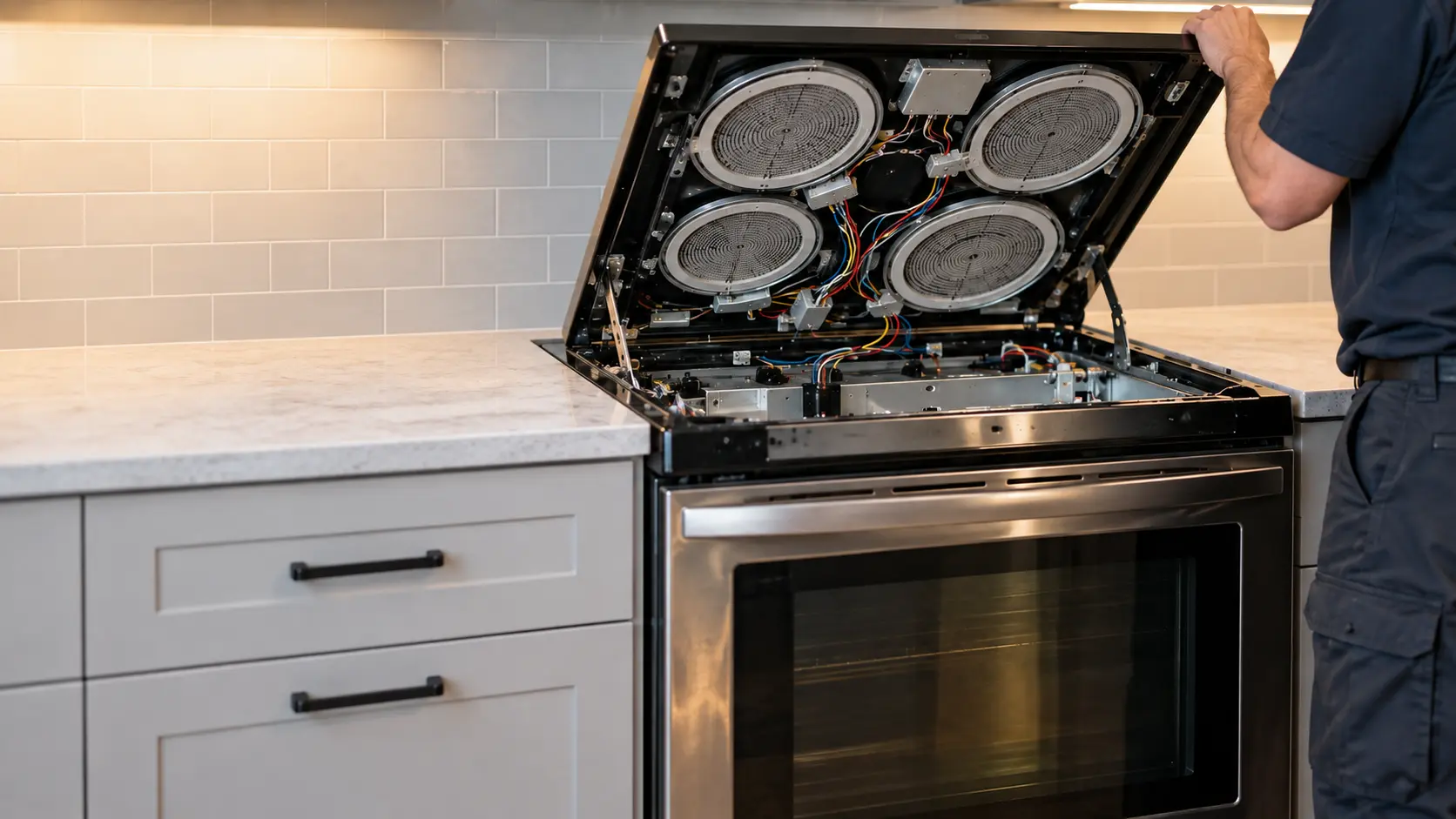
What a gas range needs from the wall
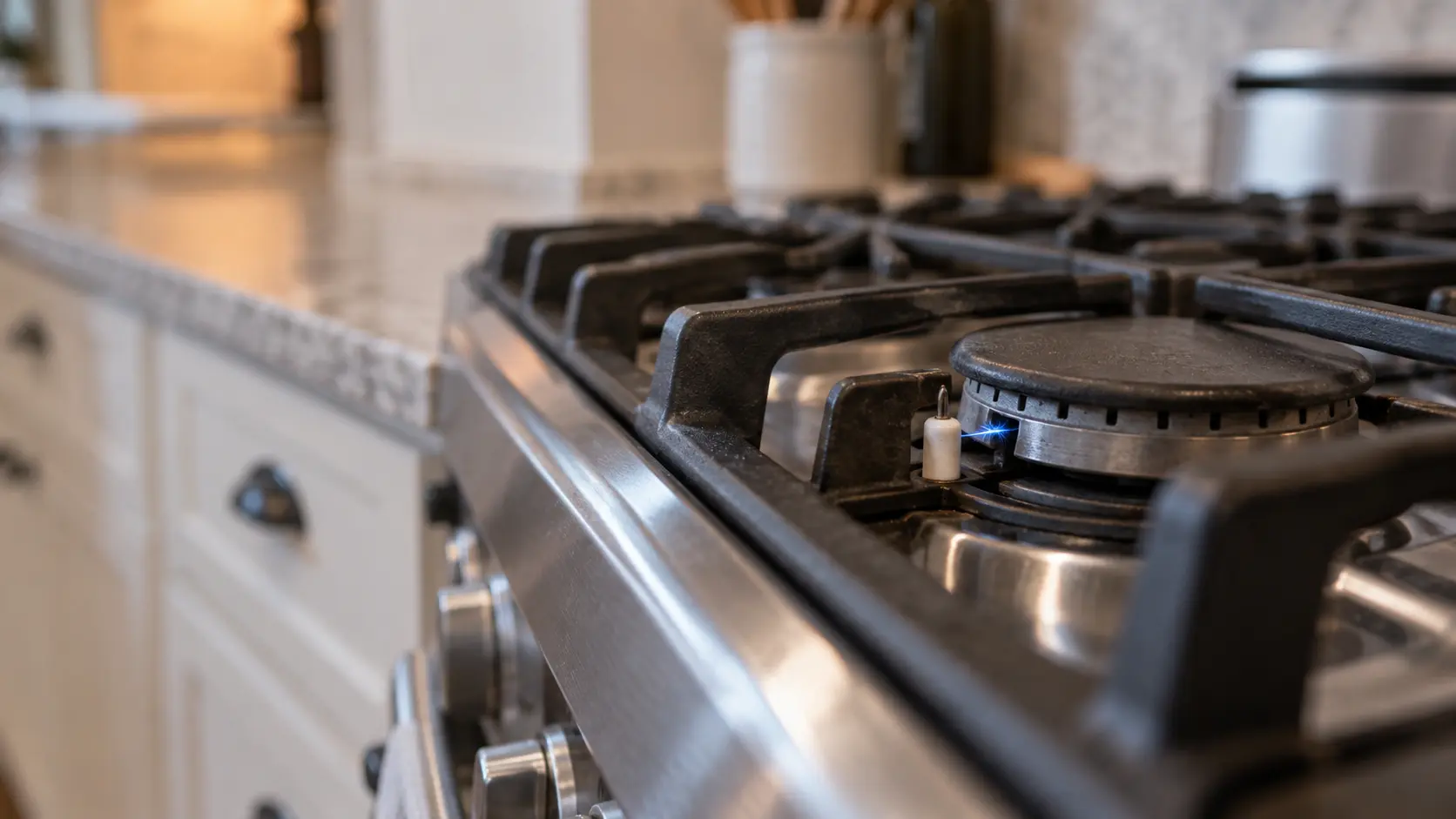
Range electrical requirements start with the fuel, and even a gas range still runs on electricity. The spark module that lights the top burners, the igniter in the oven, the clock, the display and the oven light all work on 120 volts through a standard three-prong plug. GE's instructions ask for a properly grounded, dedicated circuit protected by a 15- or 20-amp breaker or time-delay fuse, and suggest having a qualified electrician check that the receptacle is grounded.
Two details cause more trouble on gas ranges than circuit size does. Whirlpool warns that its electronic ignition will not operate on an outlet that is not properly polarized, and that on its models no keypad will respond if the metal chassis of the range is not grounded. An old two-slot outlet with an adapter, or a receptacle wired backward, can leave a brand-new range with burners that refuse to light or controls that stay dead.
No extension cords and no switched outlets
GE's gas range instructions advise against automatic, wireless or wired external switches that cut power to the range, and its electric range instructions rule out extension cords to prevent fire or shock. The plug belongs in a wall receptacle behind the range, in the area the installation drawing marks for it.
Source: GE Appliances — Installation Instructions, Gas Range (31-2001181) — 120-volt, 60 Hz, properly grounded dedicated circuit on a 15- or 20-amp breaker or time-delay fuse; receptacle checked by a qualified electrician; external switches that cut power not recommended; Whirlpool — Installation Instructions, 30-inch Freestanding Gas Ranges (W10658550B), archived whirlpool.com copy — Electronic ignition will not operate on an outlet that is not properly polarized; keypads will not operate if the metal chassis is not grounded
The 240-volt supply behind electric and induction ranges
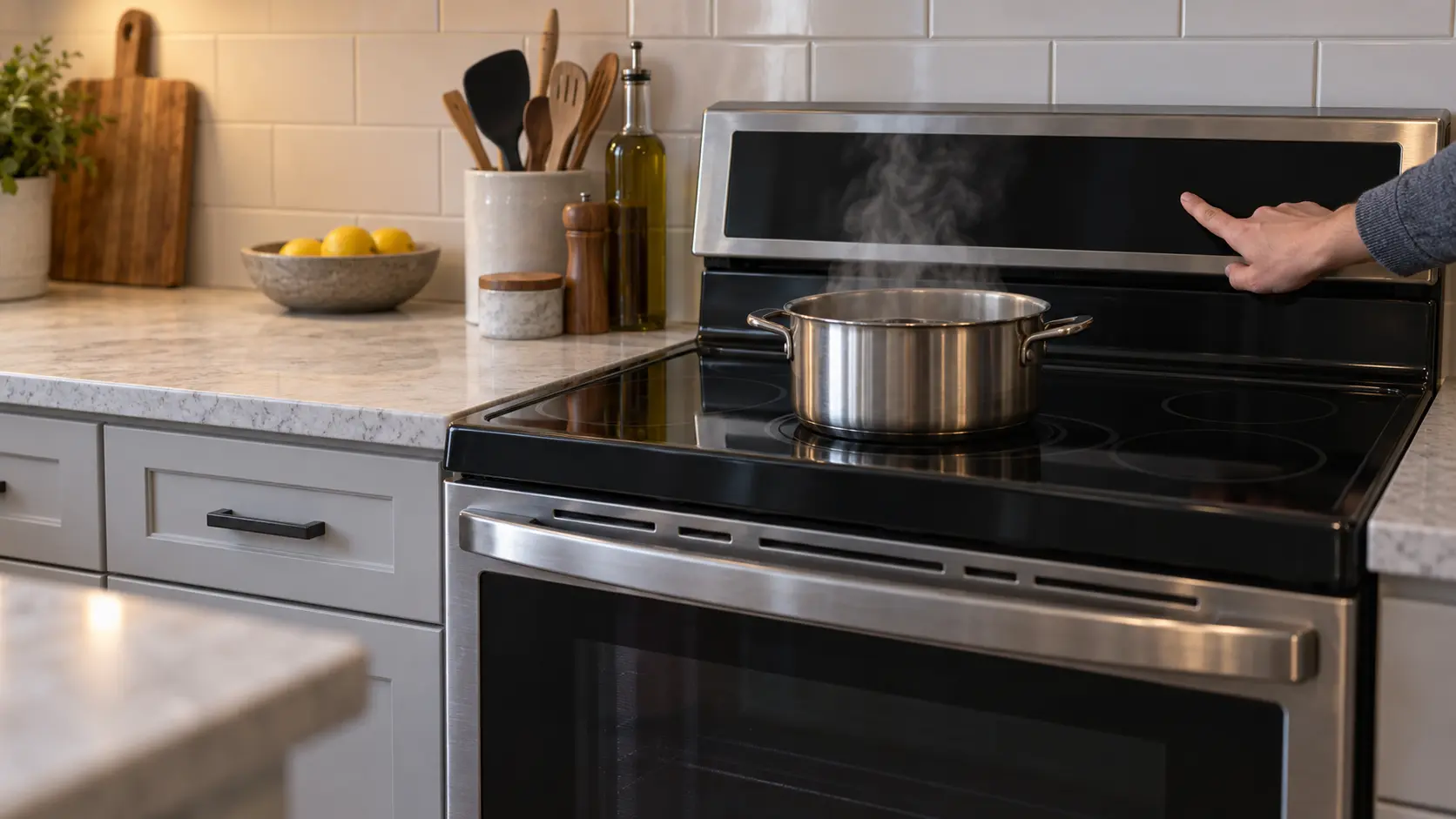
An electric range, whether it has coil elements, a radiant glass top or induction zones, heats on a single-phase 240- or 208-volt supply, with a 120-volt leg for the controls and light. GE's installation instructions call for a 120/240 or 120/208 VAC, 60 hertz system, recommend that a qualified electrician make the connection, and ask that the electrician then show the owner how to cut power to the range.
How big the breaker and wire must be depends on the range, not on the kitchen. The rating plate, which GE places on the oven frame or the drawer frame, gives the model's electrical rating, and the installation instructions and local code turn that into a breaker and wire size. An induction range replacing an old coil model is exactly the moment to compare the two plates before assuming the old circuit will do. What an electrician checks before the range goes in:
- The breaker and wire size against the new range's rating plate and local code.
- Whether the receptacle and cord are 3-wire or 4-wire, and that the two match.
- Aluminum branch wiring, which GE allows only with connectors approved for aluminum and wire rated for the right amperage and voltage.
- That the receptacle sits in the area the drawing marks, and that the cord length does not foul the storage drawer.
208 volts in apartment buildings
Whirlpool's help pages note that in a building with an elevator the range is installed on 208 volts rather than 240, and that an electric range on 208 volts takes longer to preheat. Slow preheating in that setting is the supply, not a failing bake element.
Source: GE Appliances — Installation Instructions, Free-Standing and Front Control Electric Ranges (31-2000911) — No extension cord; single-phase 120/208 or 120/240 VAC, 60 Hz; qualified electrician recommended and to show how to disconnect power; rating plate on the oven or drawer frame; aluminum wiring only with approved connectors and rated wire; UL-listed 40-amp 3- or 4-wire range cord; 4-conductor connection required in new construction since the 1996 NEC, mobile homes, RVs and where codes prohibit grounding through the neutral; ground strap removed for 4-wire, can trip a GFI breaker if left

Three wires or four
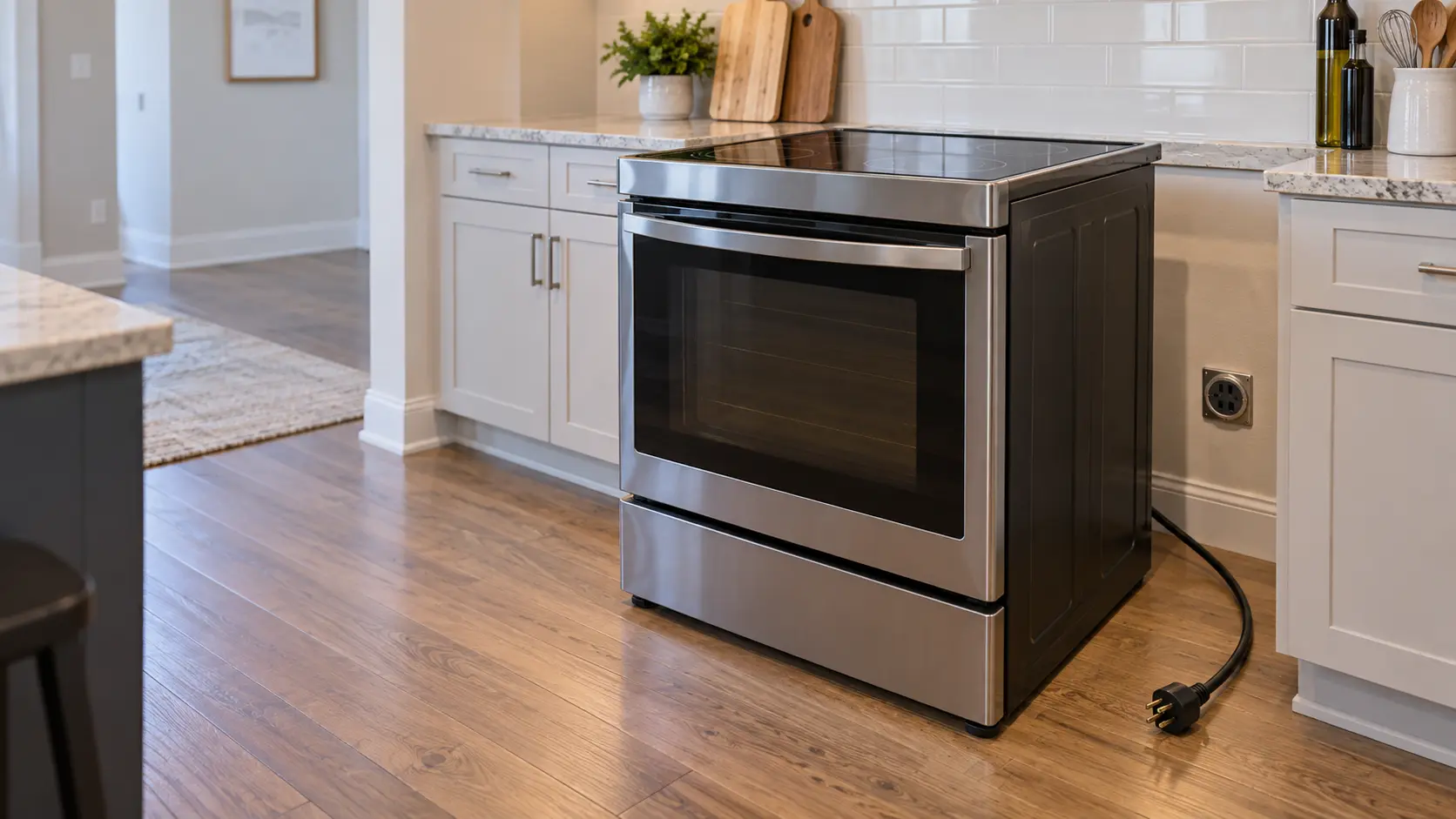
An existing home may still have a three-slot range receptacle, where the neutral also serves as the ground. GE's instructions state that since the 1996 National Electrical Code new construction must use a four-conductor connection, and so must mobile homes, recreational vehicles and any home where local rules forbid using the neutral as the ground. The fourth wire is a separate equipment ground.
The range adapts to either by way of a small metal ground strap on its terminal block. In a three-wire hookup the strap ties the neutral terminal to the range frame; in a four-wire hookup GE's instructions have it cut off and discarded, and the green ground wire goes to the frame on its own. A strap left in place on a four-wire circuit protected by a GFI breaker, the kind that cuts power when current leaks to ground, can trip that breaker the instant the range is powered.
Signs the hookup itself is wrong
Whirlpool's troubleshooting for a newly installed range that trips its breaker or blows a fuse goes straight to the connection: whether the cord's strain relief is tightened, whether each wire color matches its terminal, and whether the terminal block nuts are snug. Scorch marks or a hot, burning smell near the back of the range after installation are a reason to switch the breaker off and call, not to keep cooking.
Source: GE Appliances — Installation Instructions, Free-Standing and Front Control Electric Ranges (31-2000911) — No extension cord; single-phase 120/208 or 120/240 VAC, 60 Hz; qualified electrician recommended and to show how to disconnect power; rating plate on the oven or drawer frame; aluminum wiring only with approved connectors and rated wire; UL-listed 40-amp 3- or 4-wire range cord; 4-conductor connection required in new construction since the 1996 NEC, mobile homes, RVs and where codes prohibit grounding through the neutral; ground strap removed for 4-wire, can trip a GFI breaker if left
Dual-fuel ranges need both
A dual-fuel range burns gas on top and bakes with electric elements below, so it needs a gas connection and a 240- or 208-volt electrical supply at the same spot. Check the installation instructions for the exact model before the kitchen is finished: the receptacle and the gas stub each have a marked zone behind the range, and neither should end up where the other has to go.
For a remodel the practical point is timing. Running a new 240-volt circuit through finished walls takes far more work than running it while the cabinets are out, and moving from a gas range to an electric, induction or dual-fuel model in a kitchen that only ever had a 120-volt outlet means exactly that circuit.
When the supply, not the range, is the problem
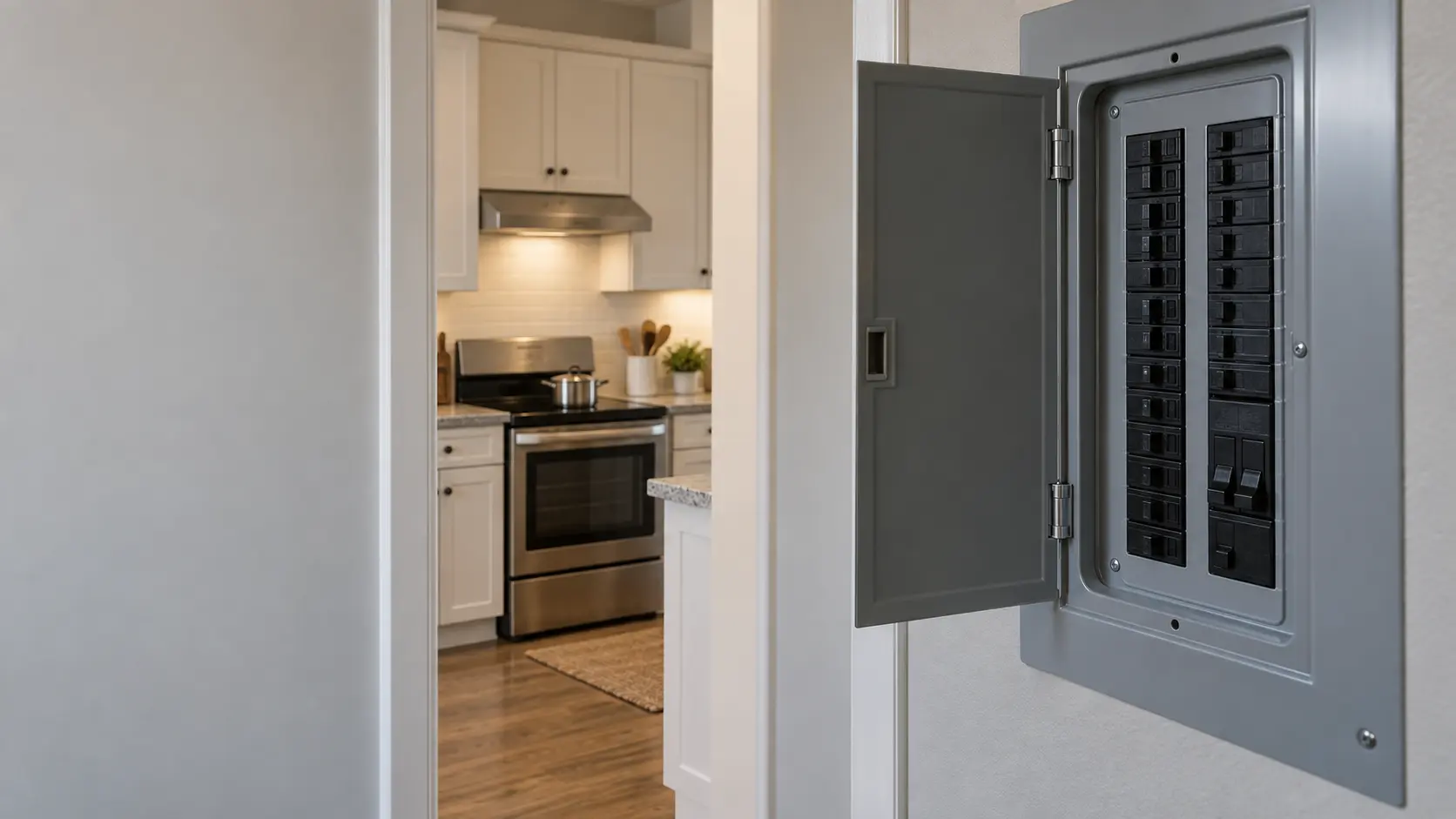
Some calls that sound like a broken range turn out to be the house wiring. A range that is completely dead, with no clock or display, may simply be on a tripped breaker or a blown fuse, and that is the first thing Whirlpool's troubleshooting asks you to check. Resetting it once is reasonable; resetting it again after it trips straight back is not.
These signs point to an electrician rather than a range technician:
- The breaker trips again as soon as it is reset.
- The receptacle or plug is warm, discolored or loose in the wall.
- Kitchen lights dim sharply whenever the oven or a large element switches on.
- A new induction range went into the receptacle left by an older coil model and nobody checked the circuit.
Source: Whirlpool — Circuit Breaker Tripped or Fuse Blown, Electric Range — Check for a tripped breaker or blown fuse; on a new installation check the strain relief, wire colors on the terminals and tight terminal block nuts