


Set up to last
Installation and setup
guides.
The gap between the cabinets, the outlet and the circuit, the gas connection, the anti-tip bracket, and converting a range from natural gas to propane.
Mon–Sat, 8am–8pm
- Three guides
- Read before you book
- Says where to stop
Book a visit
Three short steps, about a minute.
or call (844) 875-7576
Loading appointment form…
The appointment form couldn’t load. Please try again.
Installation and setup,
guide by guide.
Most of what decides how a range behaves for the next decade happens in the hour it is set in place: the connector threaded to the gas valve, the cord matched to the receptacle, the bracket screwed behind the rear foot, the orifices swapped for propane. When any of that is skipped or done from habit rather than from the instructions, the result often shows up months later as a repair call.
All 18 guides
Behind a Gas Range: What a Sound Connection Looks Like
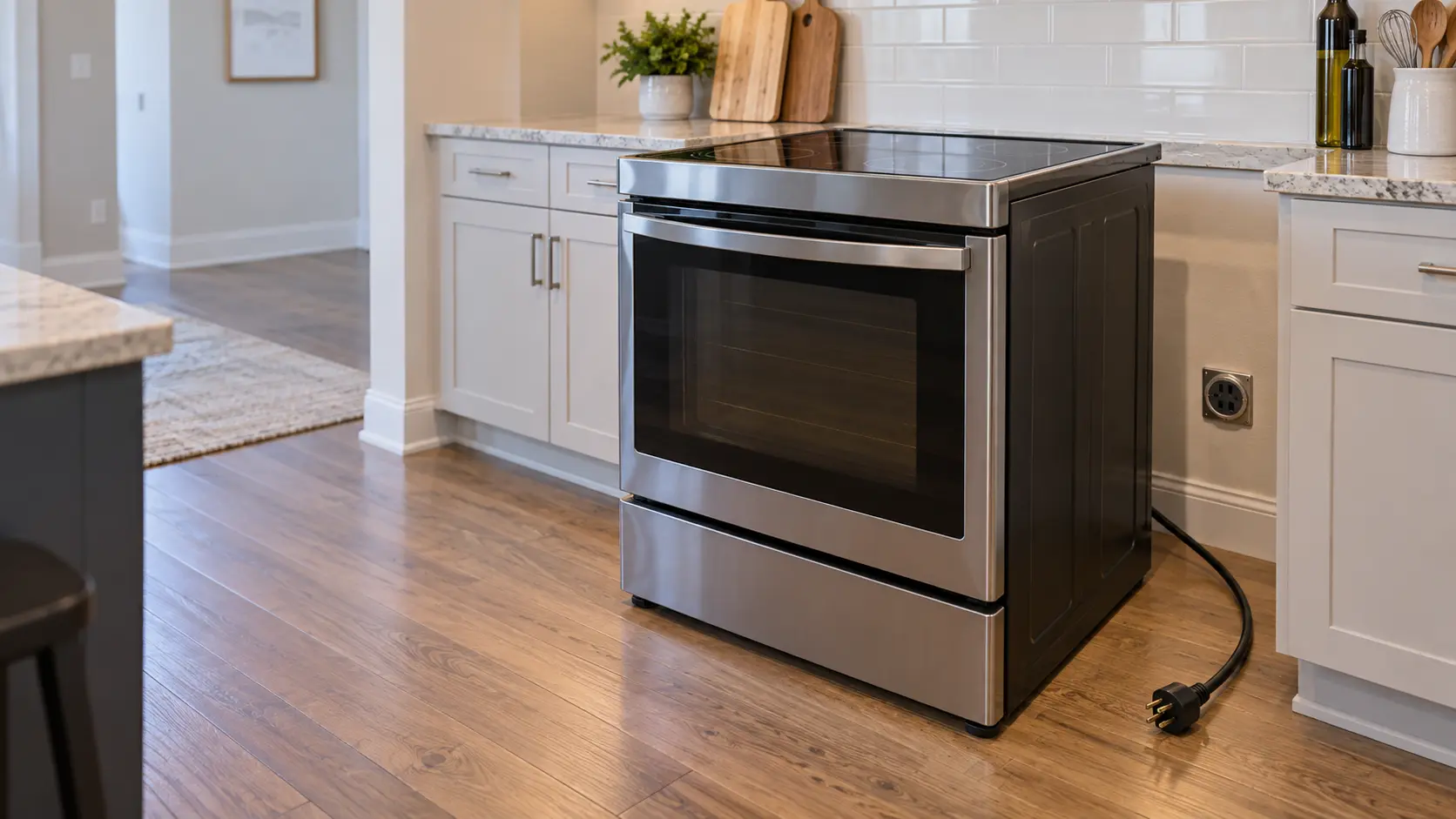
The Outlet and Circuit Every Kind of Range Needs

Set up to last.
These guides go through what should be behind a freestanding or slide-in range, why each piece is there, and how to tell a careful installation from a quick one. They quote the manufacturers' own installation instructions and the gas utilities, and point out where the brands disagree with each other.
Read them before delivery day if you are buying, moving into a new home or remodeling. None of them is a set of instructions for doing gas or electrical work yourself; they are there so you can ask the right questions of the people who do it, and recognize the answers.
Not sure where to start?The short answerBehind a Gas Range: What a Sound Connection Looks Like
A sound gas range connection runs from a manual shutoff valve you can reach, through a new, design-certified flexible connector of the right length, to the pressure regulator on the back of the range, with sealed threads, a leak test done with liquid detector and burners that light cleanly.
The short answerThe Outlet and Circuit Every Kind of Range Needs
Range electrical requirements depend on the fuel.
The short answerNatural Gas to Propane: What Converting a Range Really Involves
To convert a range to propane, a qualified installer or the gas supplier switches the range's pressure regulator to propane, replaces every burner orifice with the propane orifices supplied for that model, sets the oven air shutter and low flames, leak-tests the work and labels the range as converted.
When reading
is not enough.
If the checks in these guides did not settle it, the visit picks up from there, stop by stop.
What repairs cost- 01Every burner and the oven, tried
- 02A price before any part goes in
- 03Common parts on board
- 04Fixed, then run hot
The problems
these answer.
Each has a page of its own, with the causes in the order worth checking.
All 17 problems



Questions about
installation and setup.
Who should hook up a new gas range?
Does an electric range come ready to plug in?
What should I check after the installer leaves?
The other
sections.
Split by what you are trying to find out rather than by which part of the appliance it concerns.
All guides


Back to your everyday
Let’s get your range working again.
Three short steps online, or one call. Tell us what you are seeing and pick a window that works.