

What the glass is, and why it needs its own care
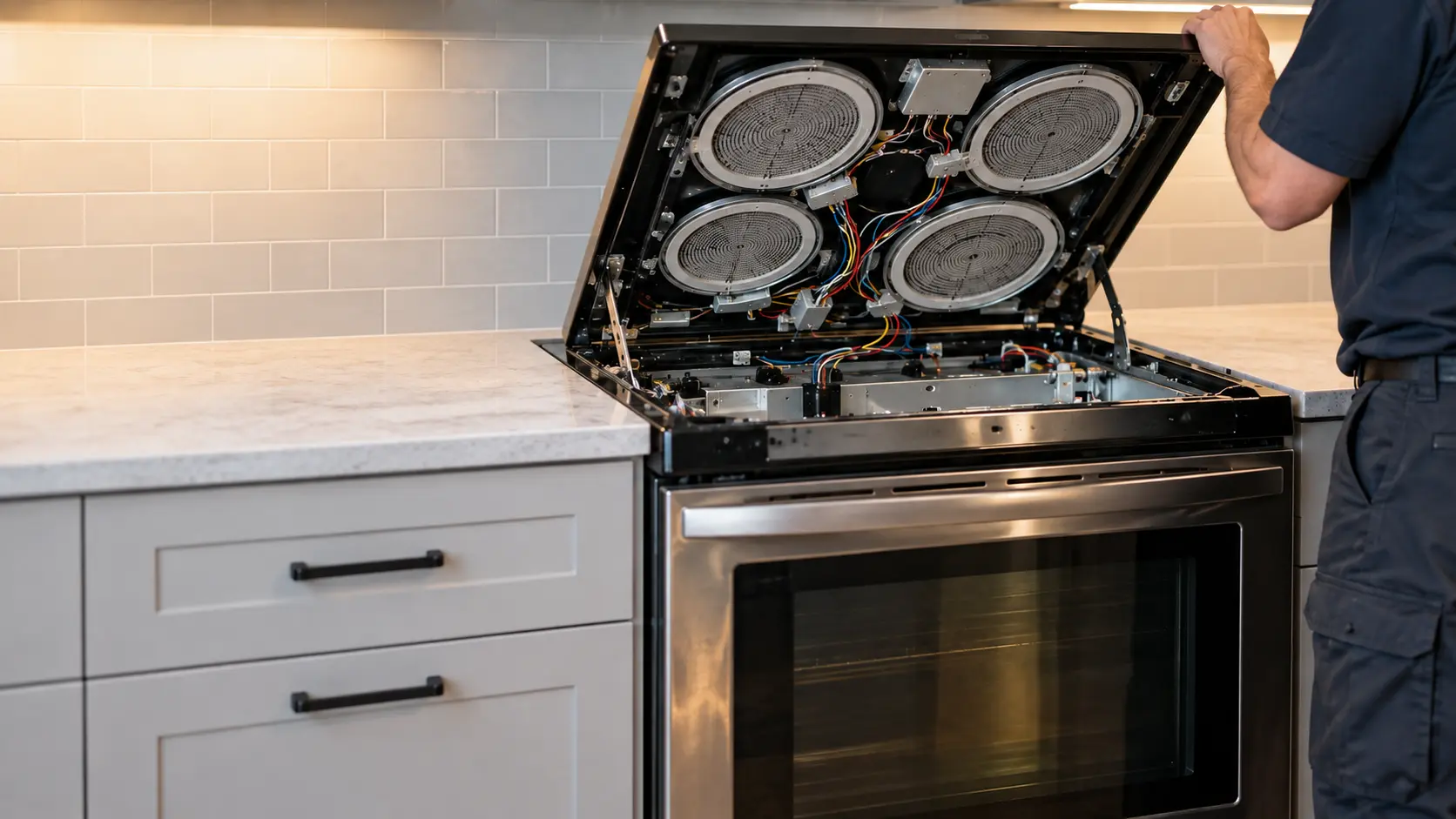
The top of a smooth electric or induction range is a single sheet of ceramic glass sealed into the frame, with the heating parts below it. It handles heat far better than window glass, yet its surface is hard enough to scratch under grit and smooth enough that sugar and metal can bond to it when hot.
It also holds heat. GE's radiant range guide notes that the hot surface lights can stay lit for 30 minutes after cooking, and that the glass keeps enough heat to go on cooking what is left in the pan. That lingering warmth shapes the whole routine: most cleaning waits for cool glass, and one kind of spill cannot.
Radiant and induction glass
Under a radiant top, glowing ribbons heat the glass, which then heats the pan, so the surface itself gets very hot. On induction, the pan heats first and warms only the glass directly beneath it. Both surfaces mark, stain and scratch in the same ways, and GE's cleaning guidance for induction points back to the same cream and scraper method.
Source: GE Appliances — Self-cleaning radiant range use and care guide (49-8723) — Hot surface lights can stay lit for 30 minutes; the glass retains heat; avoid sliding pans; overheated metal can bond to the glass; do not use it as a cutting board; a broken glass top risks electric shock
The daily routine that heads off most marks
GE recommends cleaning a new glass top with a ceramic cleaner before it is first used, and a little cream after cooking from then on, because the film it leaves makes the next cleanup easier. Its support pages warn that sponges or cleaners other than the recommended ones can damage the surface.
- Wait until the hot surface light is off and the glass is cool to the touch.
- Shake the cream and put a few drops on the soiled area, or on the whole top if it is due a full clean.
- Spread it with a paper towel or a cleaning pad made for glass tops, pressing harder where soil remains.
- Buff away every trace with a dry cloth or paper towel; the cream does not need rinsing, but GE says not to heat the glass until it has been wiped off.
Source: GE Appliances — Electric range and cooktop: glass cooktop cleaning instructions — Clean with an approved ceramic cleaner before first use; do not heat until cream is wiped off; scrape at about 45 degrees with cream; boiled-dry aluminum or copper may stain permanently; sugary spills and melted plastic pit the glass unless moved to a cool area while hot

Burned-on residue, metal marks and white film
Most stubborn marks on a smooth top fall into three groups, and each one has its own remedy. All three are handled on cool glass.
Using the razor scraper properly
For heavy, burned-on soil, GE's instructions are to hold a razor scraper at about a 45-degree angle against the glass, press firmly, and keep a small amount of cream on the residue while scraping, then finish with the cleaning pad and a final polish. GE's own scraper ships with its blade reversed for safety, so it has to be turned and reseated before first use, and a dull or nicked blade should never touch the glass.
Metal marks and dark stains
Gray streaks that look like scratches are usually metal rubbed off a pan slid across the glass, and cream with the pad or scraper removes them. A darker stain appears when a pot with a thin aluminum or copper layer boils dry; GE says to remove it before the zone is heated again, or it may become permanent.
Water marks and changing speckles
A metallic sheen or white film comes from minerals left when water and food evaporate, and cream takes it off. On glass with a printed pattern, speckles that seem to change color are soft metal gathered from copper or aluminum pan bases, which cream and the scraper also lift.
Sugar and melted plastic: move it while it is hot
Jam, fudge, candy syrup and melted plastic behave differently from ordinary spills. GE warns that they can pit the glass unless removed while still hot, and pitting cannot be polished out; the glass has to be replaced. The method is deliberate: turn off every zone, lift the hot pans away, put on an oven mitt and use a new single-edge razor scraper to push the spill to a cool part of the glass, then pick it up with paper towels. Leave whatever remains until the top has cooled, and do not cook on that zone until the residue is gone.
Plastic or porcelain that has already hardened onto the glass, such as the base of a kettle left on a warm zone, usually bonds for good. At that point the top has to be replaced, which is a repair rather than a cleaning job.
Source: GE Appliances — Electric range and cooktop: glass cooktop cleaning instructions — Clean with an approved ceramic cleaner before first use; do not heat until cream is wiped off; scrape at about 45 degrees with cream; boiled-dry aluminum or copper may stain permanently; sugary spills and melted plastic pit the glass unless moved to a cool area while hot
Pan habits that protect the glass
The glass is at its most vulnerable to the things set down on it every day. A few habits keep scratches, stains and chips away for the life of the range.
- Lift pans on and off; even a slightly rough base or a grain of salt under it can scratch the glass when slid.
- Use flat-bottomed cookware, and check the base for nicks and burrs before it goes on the glass.
- Never let a pot boil dry; overheated metal can bond to the surface and copper can leave a permanent stain.
- Do not store things on the glass or use it as a cutting board, and keep plastic utensils and wrappers off a warm zone.
- Keep rings and other hard jewelry clear of the surface while cleaning, since they can scratch it too.
Source: GE Appliances — Self-cleaning radiant range use and care guide (49-8723) — Hot surface lights can stay lit for 30 minutes; the glass retains heat; avoid sliding pans; overheated metal can bond to the glass; do not use it as a cutting board; a broken glass top risks electric shock


