Check one: the power the range actually gets
Every range needs electricity, including a gas one. A gas range plugs into an ordinary 120-volt outlet to run its igniters, clock and oven control; an electric or induction range is wired to a 240-volt circuit fed by a double breaker. GE notes that on most slide-in and freestanding ranges the plug is reached by pulling out the lower storage drawer.
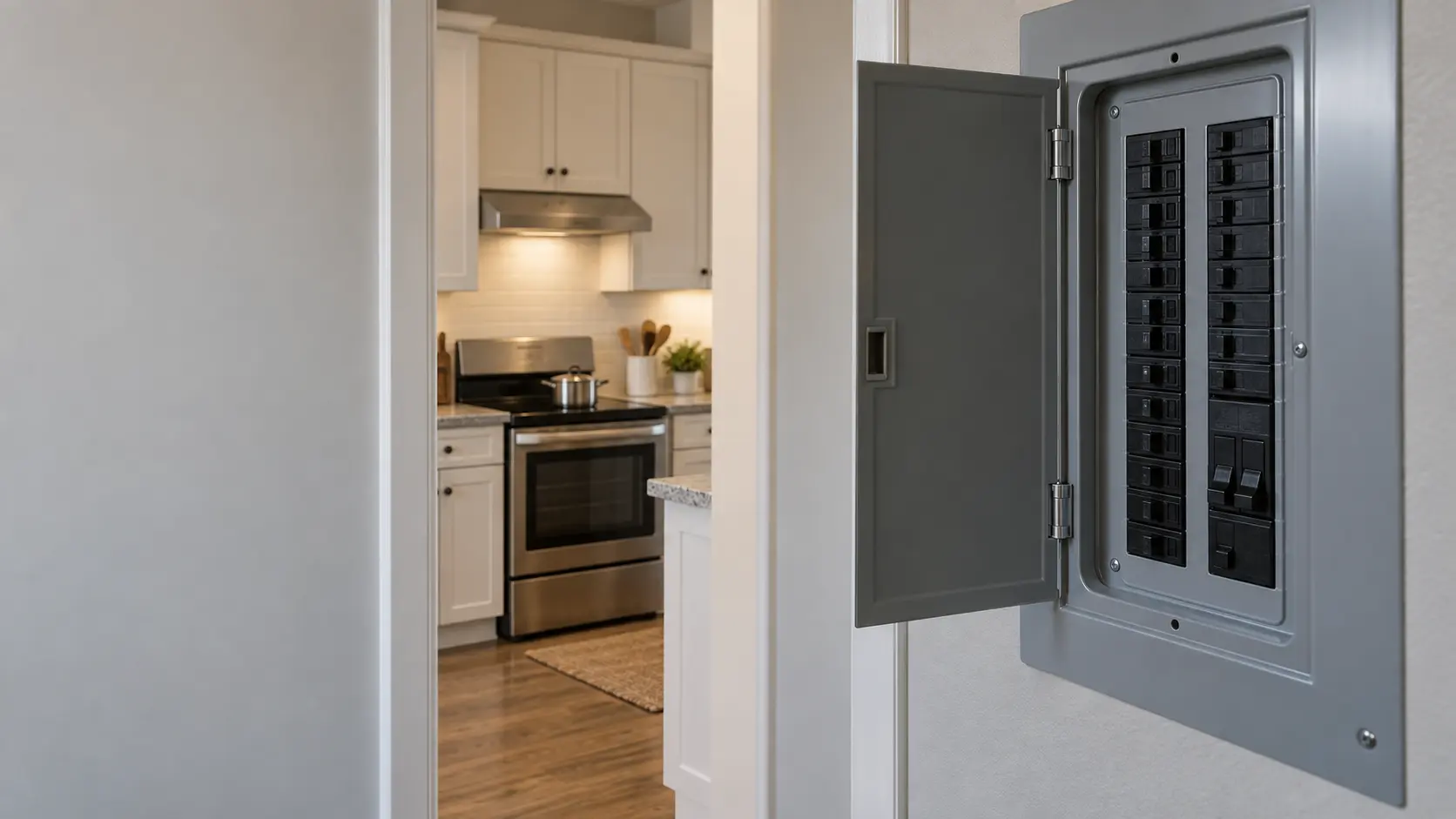
Find the range's breaker and switch it fully off, wait one full minute, and switch it back on; Whirlpool uses the same reset for a range whose display or top stops responding. On a gas range, check the outlet with a lamp or small appliance and make sure the range is not on a two-prong adapter or an extension cord, both of which Whirlpool rules out.
When the clock works but nothing heats
A 240-volt breaker is two breakers tied together, and one side can trip while the display stays lit. That produces a range with a working clock and cold elements. If a reset changes nothing, GE's advice for a range that shows the time but will not heat on top is to have the installer check how the cord is connected, which is behind a cover and not an owner's job.
Source: Whirlpool — Nothing is working (electric range) — After an outage switch the breaker off for one minute, then watch the range; control lock, delay start, demo mode; Energy Save mode leaves the display blank on select models; Whirlpool — Oven not working (gas range) — A grounded 120-volt outlet with no two-prong adapter or extension cord; test the outlet with a small appliance; air in a new connection clears by running surface burners; the shutoff is usually on the branch pipe where it enters through the wall or floor; GE Appliances — Frequently asked questions about ranges and wall ovens — Pull out the lower storage drawer to reach the plug on most slide-in and freestanding ranges; if the clock works but the elements do not, the cord connection may be wired improperly; typical preheat 15 to 20 minutes for gas and hidden elements, 5 to 10 for a visible element
Check two: the gas shutoff, on gas and dual-fuel ranges
The range's shutoff valve is on the pipe that feeds it, usually on the branch pipe where it comes through the wall or floor behind the range, according to Whirlpool. If other gas appliances in the house work and the valve for the range is open, gas is reaching the appliance. You can often see the valve by looking down behind the range with a flashlight after taking out the storage drawer.
Whirlpool also notes that when a range has just been installed or reconnected, air in the line can delay the first flame; running a surface burner for a short time clears it. That is as far as this check goes. Do not move the range, touch the flexible connector or loosen anything, and if you notice a gas smell, leave the house and call the gas utility from outside.
Source: Whirlpool — Nothing is working (gas range) — Verify the main gas valve is on; check the breaker or fuse and the outlet; control lock; delayed start; demo mode displays 'Try the Product' or 'Showroom Mode'; Whirlpool — Oven not working (gas range) — A grounded 120-volt outlet with no two-prong adapter or extension cord; test the outlet with a small appliance; air in a new connection clears by running surface burners; the shutoff is usually on the branch pipe where it enters through the wall or floor

Check three: locks, modes and timers on the control
Many silent ranges are simply locked or waiting. Whirlpool's list for a range that seems dead covers several settings that stop it from heating by design, and the display often gives them away if you read it closely.
Cancel everything with the off or cancel key, set the clock if it is blinking after an outage, and then start a plain bake with no timer. If the display shows a code, copy it character for character, dashes included, before any reset clears it.
- A control lock, which on touch-control models usually blocks the top and the oven together.
- Demo or showroom mode, which Whirlpool says can show messages such as 'Try the Product' or 'Showroom Mode' and runs without heating.
- A delayed start, which holds the bake until the time you chose.
- An energy-saving sleep mode on some models, which leaves the display blank until a key is pressed.
Ranges with knobs instead of keys
Knob-controlled tops have their own version of this check. Whirlpool says the knobs on some coil ranges must be pushed in before they turn, and GE asks that a gas knob be turned fully to off so it pops back out, otherwise its igniter can keep clicking.
Source: Whirlpool — Nothing is working (gas range) — Verify the main gas valve is on; check the breaker or fuse and the outlet; control lock; delayed start; demo mode displays 'Try the Product' or 'Showroom Mode'; Whirlpool — Nothing is working (electric range) — After an outage switch the breaker off for one minute, then watch the range; control lock, delay start, demo mode; Energy Save mode leaves the display blank on select models
Check four: the burners or elements on top
On a gas top, lift each grate and look at the caps. A cap sitting on the wrong base, tilted on its pins or still damp from cleaning is the most common reason a burner clicks without lighting, and GE says it can take up to 10 or 12 clicks for a healthy burner to catch. Match every cap to its base and give a freshly cleaned top a few hours to dry.
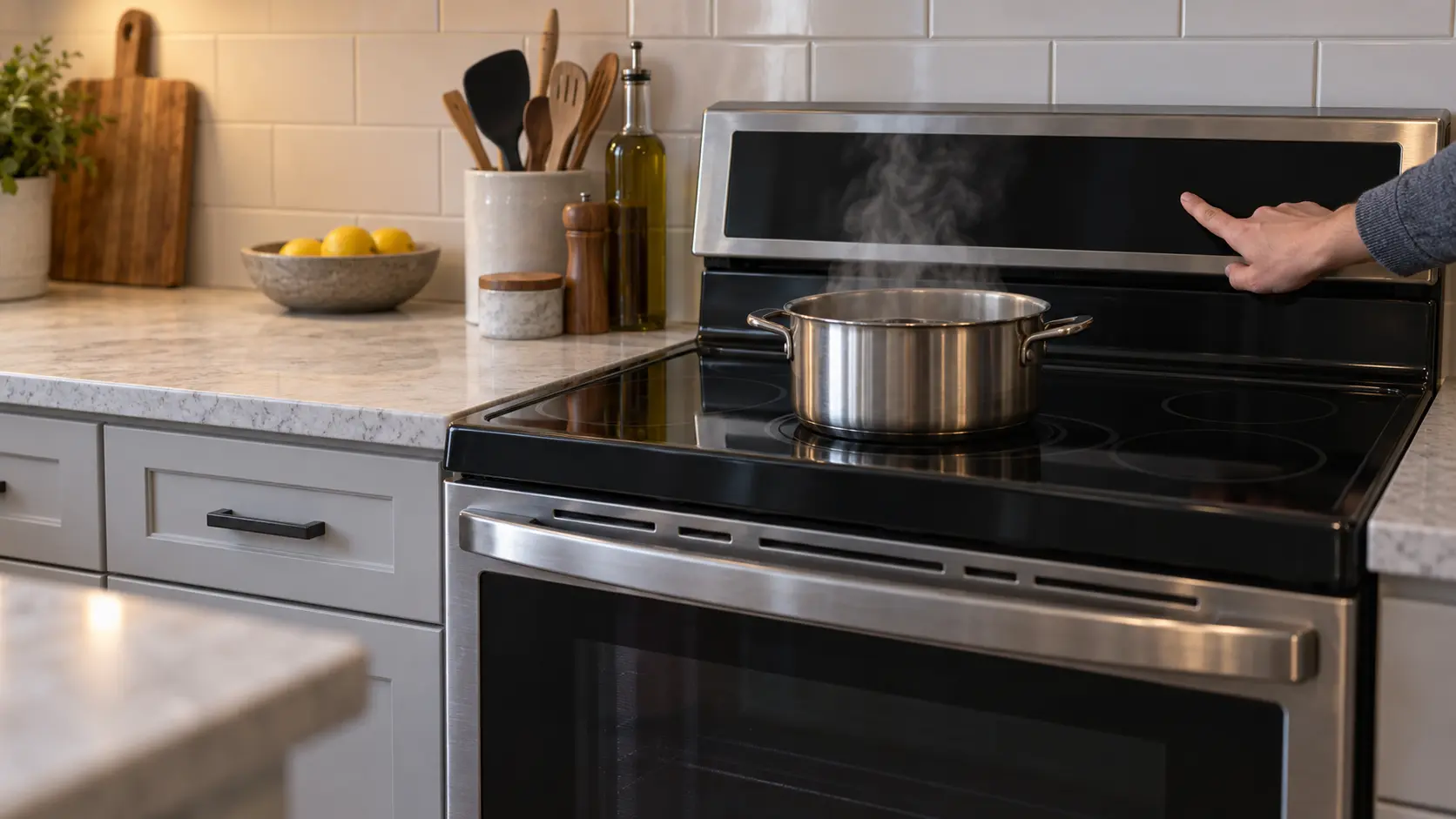
On a glass top, remember that radiant elements switch on and off and do not glow on low settings. On a coil top, lift the coil and push it back into its socket firmly. On an induction top, try the zone with a pan a magnet clings to before you decide it has failed.
- Gas: caps matched, flat and dry; electrode tips clean.
- Glass top: zone size selected; pan flat on the glass.
- Coil: coil fully seated in its socket.
- Induction: a magnetic, flat-bottomed pan in the center of the zone.
Source: Whirlpool — Coil element not working — Push the knob in before turning it; the coil must be inserted properly; GE Appliances — Common causes for slow ignition, no ignition or clicking on surface burners — Wet or dirty burners and mismatched caps prevent ignition; it can take up to 10 or 12 clicks to ignite a burner
Check five: one plain bake in the oven
Clear the oven of extra racks, pans and any foil on the floor, set it to 350°F and time the preheat. GE's typical figures are 15 to 20 minutes for gas ovens and hidden bake elements and 5 to 10 minutes for a visible element, and Whirlpool notes that an electric range on 208 volts, common in apartment buildings with elevators, preheats more slowly than one on 240.
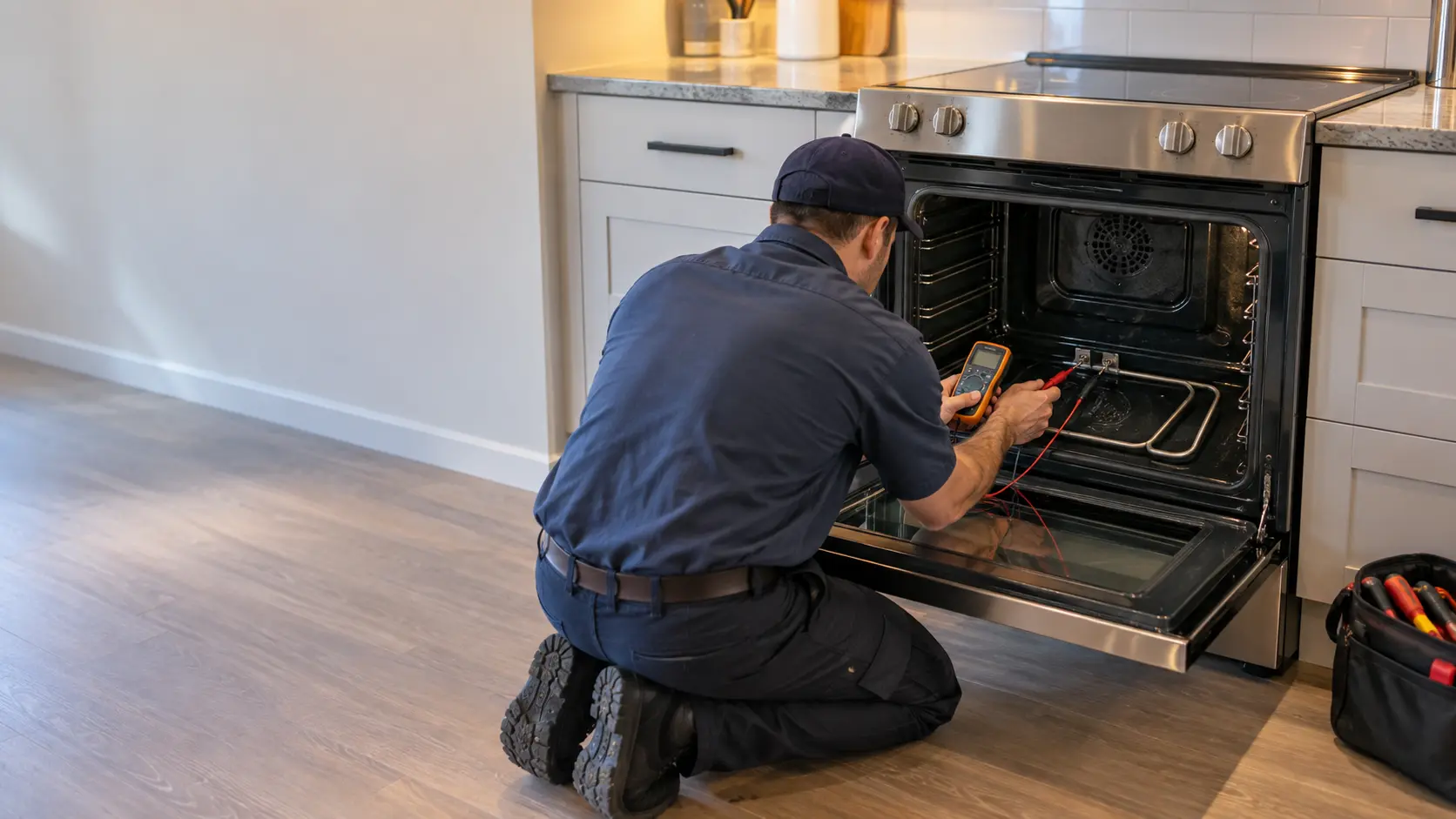
Then bake something simple on the center rack and look at it. A preheat far past those times, a tray burned underneath and raw on top, or an oven that never warms at all is the evidence a technician needs, and your note of how long it took saves the first part of the visit.
What to write down for the booking
The model and serial numbers from the tag, the type of range, what you checked and what changed, the preheat time, any code on the display and when the problem started. A photo of the display and of the test bake is often clearer than a description.
Source: Whirlpool — Long preheat times (range) — A range on 208 volts, as in buildings with elevators, preheats more slowly than on 240 volts; foil on the floor and unused racks slow preheat; GE Appliances — Frequently asked questions about ranges and wall ovens — Pull out the lower storage drawer to reach the plug on most slide-in and freestanding ranges; if the clock works but the elements do not, the cord connection may be wired improperly; typical preheat 15 to 20 minutes for gas and hidden elements, 5 to 10 for a visible element