What dual-fuel actually means
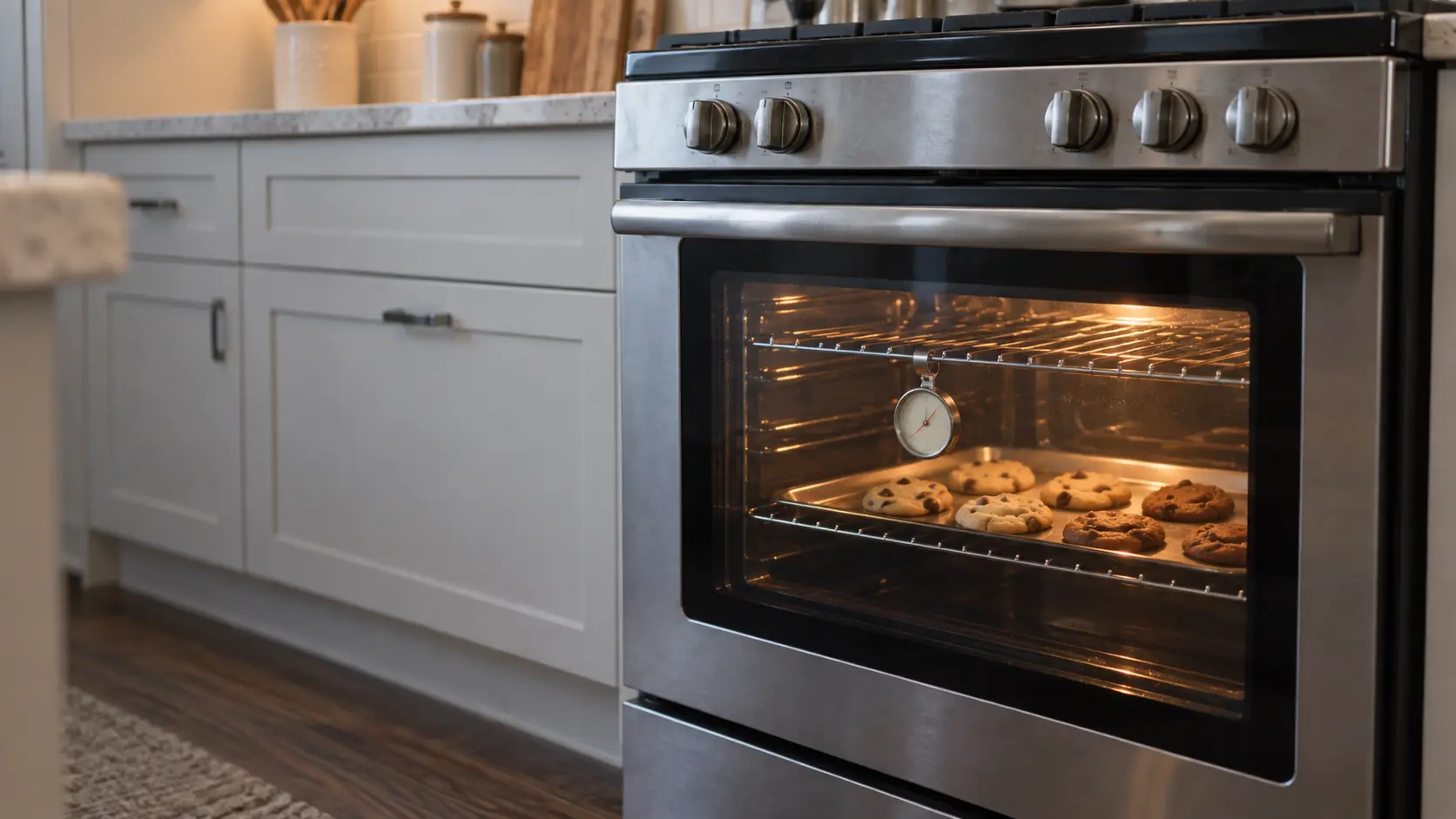
The name describes the two energy sources, not the size or the styling. The burners on top burn natural gas or propane, so the heat under a pan changes as fast as the knob turns. The oven below heats with electric elements, usually a bake element, a broil element and a third element behind a convection fan, which gives the steady, dry heat bakers look for.
Owners choose the combination for exactly that pairing, and they pay for it twice: once in the showroom and once in the supply work if the kitchen was set up for only one fuel.
Not the same thing as pro-style
Pro-style describes a look and a build: a deep stainless frame, heavy continuous grates, large metal knobs, and burners rated well above an ordinary range. Many pro-style models are dual-fuel, but plenty are all-gas, and a growing number put induction on top. A modest 30-inch freestanding range can be dual-fuel without being pro-style at all.
Where the electricity goes
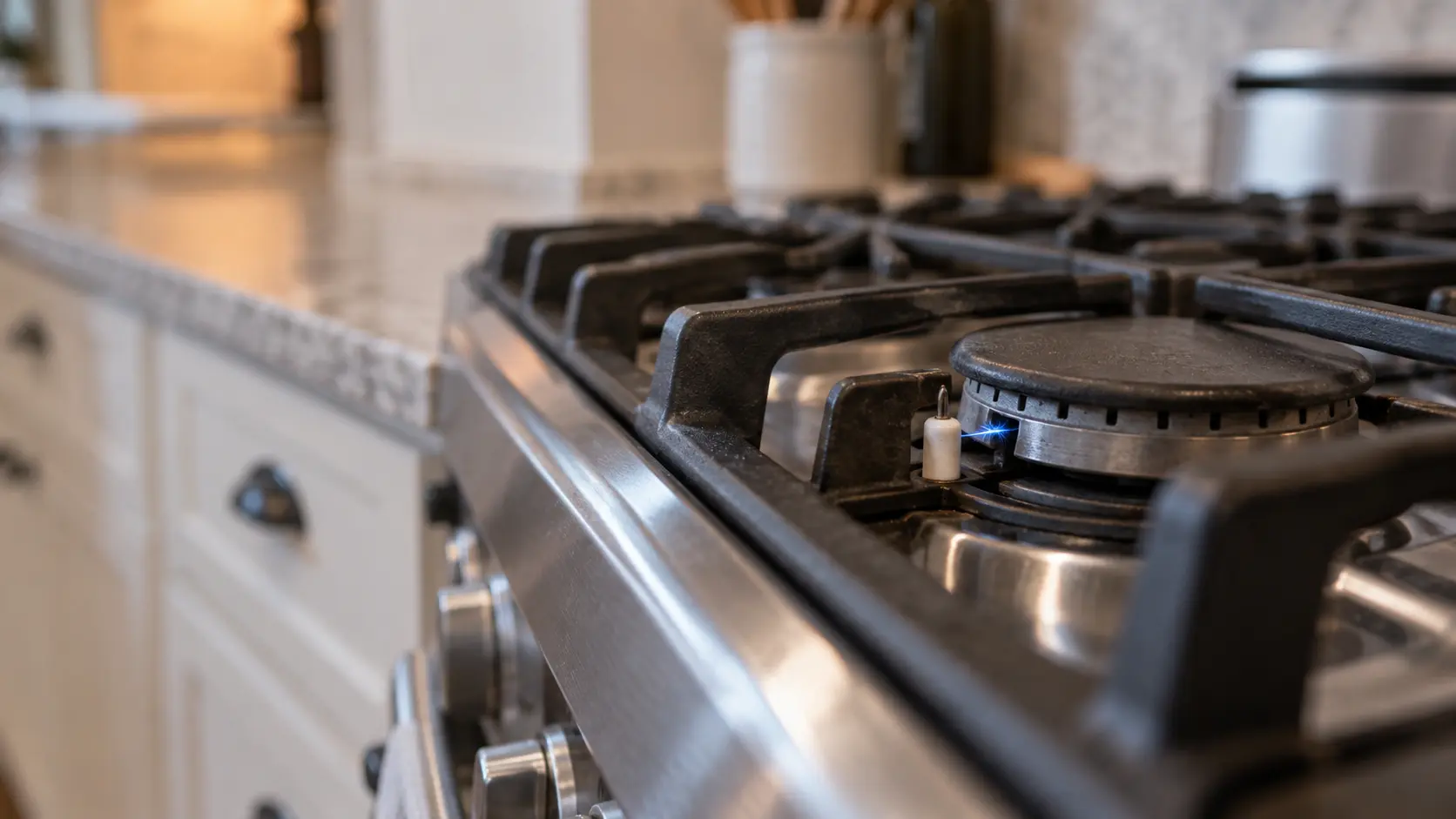
On a dual-fuel range the 240-volt supply feeds the oven elements, the convection fan, the cooling fan and the controls, while the gas feeds only the burners. The spark igniters on top still run on electricity, so the burners are tied to the same power cord as the oven even though they burn gas.
Two supplies behind one appliance
Everything a dual-fuel range needs from the house is listed in its installation instructions, and it is worth reading that sheet before the range is ordered rather than on delivery day.
- A gas supply with an accessible shutoff valve, sized for the combined input of every burner on the range, and connected by a qualified installer.
- A dedicated 240-volt circuit at the amperage the rating plate asks for; Monogram lists 25 amps for its 30-inch ranges, 30 amps for 36-inch models and 50 amps for 48-inch ones.
- The pressure regulator supplied with the range, fitted where the instructions show it, not left in the box.
- For a propane home, the maker's conversion parts for the burners, installed by a qualified gas technician before first use.
Replacing an all-gas model
An all-gas range usually plugs into an ordinary grounded outlet; GE's gas range manual specifies 120 volts on a 15- or 20-amp circuit. Swapping it for a dual-fuel model leaves the gas line in place but means an electrician has to bring a heavy circuit to the spot, and that work belongs in the budget from the start.
Source: Monogram — Appliance amp size — Monogram lists 25 amps for 30-inch ranges, 30 amps for 36-inch ranges and 50 amps for 48-inch ranges

Widths from 30 to 48 inches, and what grows with them
Standard kitchens are built around a 30-inch gap, and many pro-style ranges come in that width. Wider models, typically 36 and 48 inches, add burners, a griddle or a second oven, and each step up in width brings a heavier frame, a larger circuit and a bigger demand on the exhaust fan.
30- and 36-inch models
These fit a standard or slightly widened opening, carry four to six burners and one oven cavity, and usually match the circuit an electric range already had. They are the easiest pro-style ranges to service, because the whole frame can slide forward on most kitchen floors.
48-inch models and wider
A 48-inch range normally has two ovens side by side, one full-size and one smaller, and the heaviest frames in any home kitchen. Planning one means planning the cabinet run, the floor under it, the circuit and the ventilation together, because none of them can be adjusted after the range is in.
Source: Monogram — Appliance amp size — Monogram lists 25 amps for 30-inch ranges, 30 amps for 36-inch ranges and 50 amps for 48-inch ranges
Air, clearances and the floor
More burner output means more heat, moisture and combustion products leaving the pans. EPA recommends an exhaust fan vented to the outdoors over gas burners as one of the most effective ways to reduce nitrogen dioxide indoors, and a powerful range makes that advice harder to ignore. Makers of pro-style ranges print the minimum clearances to cabinets above and beside the range in the installation sheet, and those figures are often larger than for a basic model.
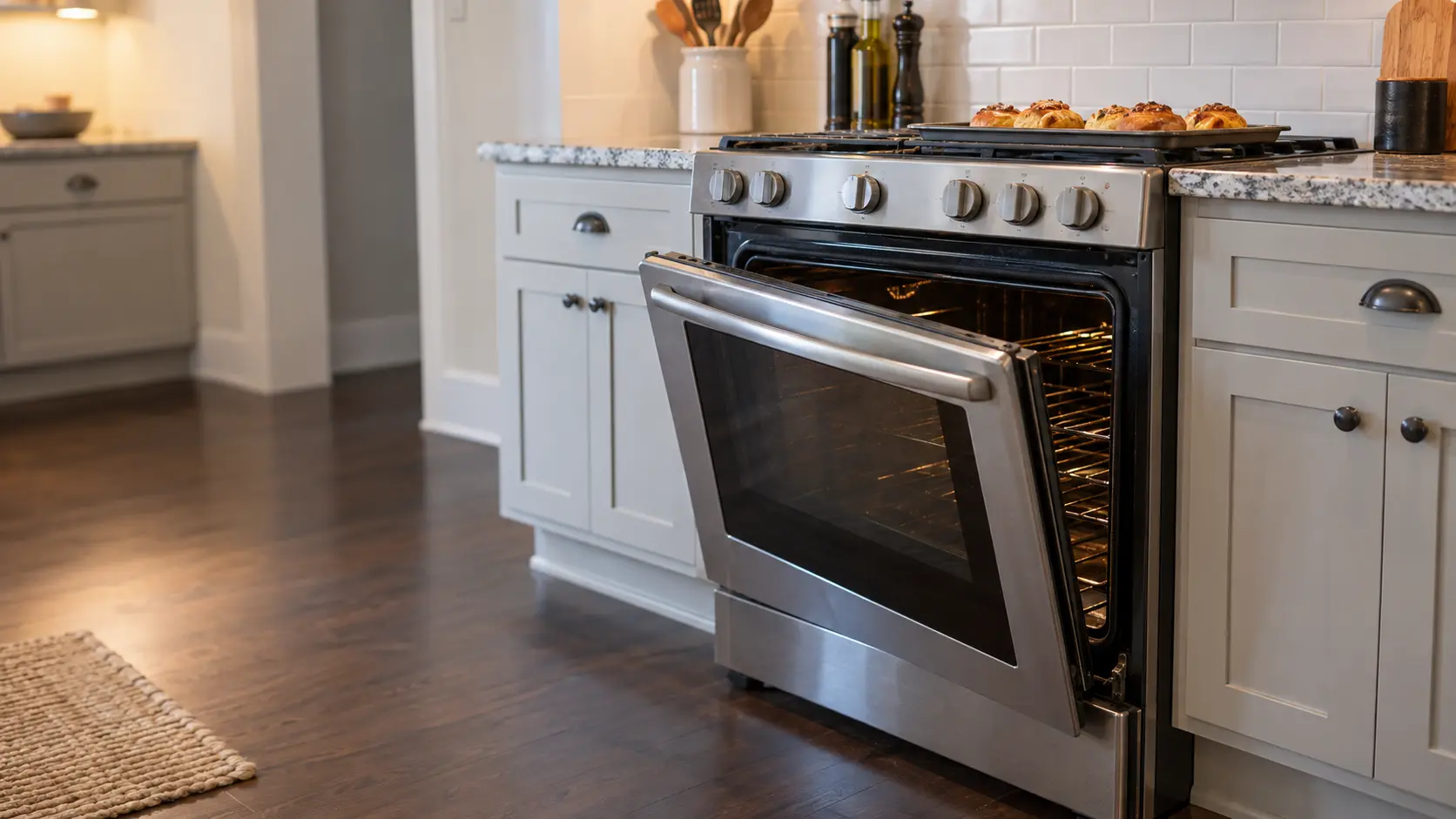
Weight changes the rest. The floor has to be level and strong enough to carry the frame without flexing, and the anti-tip device still applies: GE warns in its range manuals that all ranges can tip, that the supplied device has to be installed, and that it must be checked every time the range is pulled away from the wall.
Before a heavy range is delivered, walk through the kitchen with its installation sheet in hand:
- Measure the opening and the clearance to the cabinets above against the sheet, not against the old range.
- Check that the floor is level across the whole footprint, including under the rear legs.
- Confirm there is a path wide enough to bring the range in on a dolly and turn it into its opening.
- Locate the gas shutoff and the circuit breaker, so both can be reached without moving the range later.
Source: GE Appliances — Self-cleaning gas range owner's manual and installation instructions (49-80036) — A gas range plugs into a grounded 120-volt circuit protected at 15 or 20 amps; all ranges can tip, and the supplied anti-tip device must be installed and checked after the range is pulled out; EPA — Nitrogen dioxide's impact on indoor air quality — Venting combustion sources outdoors, including an exhaust fan vented outdoors over gas burners, is among the most effective ways to reduce nitrogen dioxide exposure
Living with a big range: care and repairs
A dual-fuel or pro-style range is built to last, and most of its repairs are the same kinds of part found on smaller ranges, only more of them. What differs is access: heavy grates, deep frames and a gas connection behind the range make each visit a little longer.
| Part | What the owner notices | Where it sits |
|---|---|---|
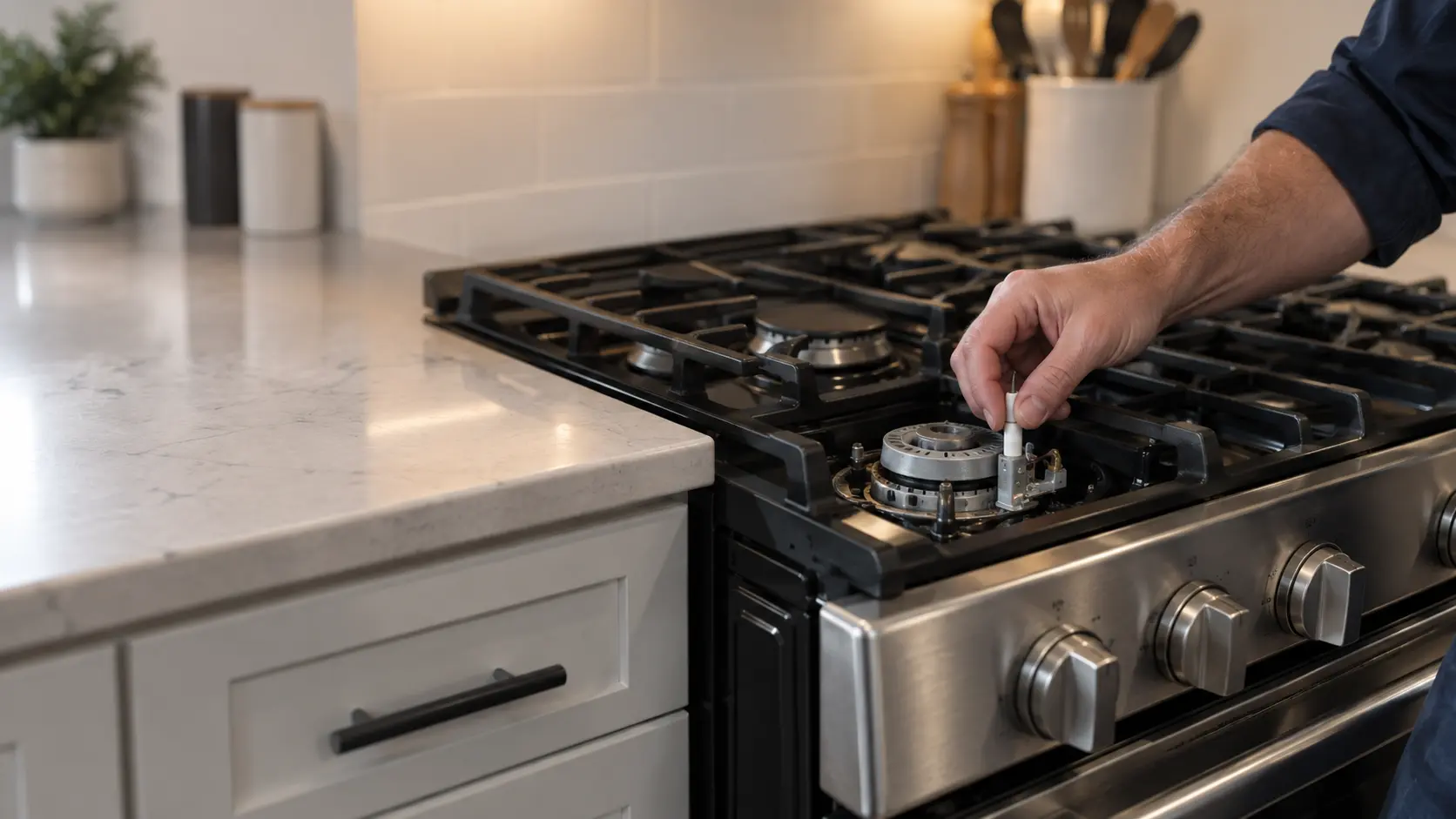
| Spark igniter or spark switch | Clicking that will not stop, or a burner that will not catch | Beside each burner, and behind each knob |
| Bake, broil or convection element | An oven slow to preheat or heating only from one side | Inside the oven cavity or behind the rear panel |
| Convection fan motor | A fan that hums, rattles or stays still | Behind the back wall of the oven |
| Oven temperature sensor | Baking results that drift from the set temperature | A slim probe inside the upper rear of the cavity |
| Door hinges | A heavy door that drops open or will not seal | In the lower corners of the oven door |